All posts by pj1junj

Why NC Push Button Switches Are Widely Used in Emergency Stop Circuits

Introduction

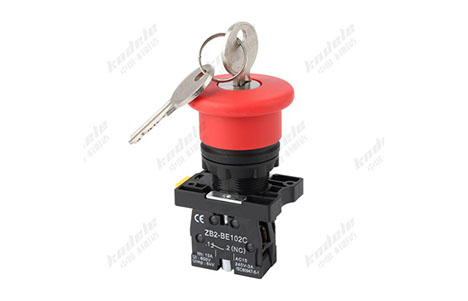
Emergency stop (E-stop) systems are a critical part of industrial safety, designed to immediately shut down machinery in hazardous situations. One key component consistently used in these systems is the Normally Closed (NC) push button switch. But why is the NC configuration preferred over other types of switches?
Understanding Emergency Stop Circuits

An emergency stop circuit is designed to:

Immediately stop hazardous motion or power

Protect operators and equipment

Prevent further damage during emergencies

E-stop circuits must be reliable, fast-acting, and fail-safe, even in the event of component failure.

What Is an NC Push Button Switch?

A Normally Closed (NC) push button switch keeps the electrical circuit closed during normal operation. When the button is pressed, the contacts open, cutting off power or control signals.

Normal state: Circuit closed (machine can run)

Emergency press: Circuit opens (machine stops)

This operating logic is the foundation of safe emergency stop design.

Fail-Safe Design Principle

Automatic Shutdown on Failure

NC push button switches are inherently fail-safe. If a wire breaks, a terminal loosens, or the switch itself fails, the circuit opens—causing the machine to stop.

This ensures:

Continuous monitoring of circuit integrity

No “hidden failures” during operation

Immediate shutdown in unsafe conditions

In contrast, a Normally Open (NO) switch may fail without stopping the system.

Immediate and Reliable Power Interruption

When an NC E-stop button is pressed:

The circuit opens instantly

Control power is cut off

Motors, actuators, or control relays stop immediately

This fast response is essential in emergencies where milliseconds can prevent serious injury or equipment damage.

Compliance with Safety Standards

International safety standards require or strongly recommend NC contacts in emergency stop systems, including:

IEC 60204-1 (Safety of machinery – Electrical equipment)

ISO 13850 (Emergency stop function)

EN 418 (Emergency stop devices)

These standards emphasize:

Positive opening operation

NC contacts for stop functions

Reliable interruption of control circuits

Using NC push button switches helps ensure regulatory compliance and workplace safety certification.

Series Wiring for Multiple Emergency Stops

NC push button switches can be wired in series across multiple E-stop locations:

Pressing any button opens the circuit

All machines stop simultaneously

Simplified wiring and logic

This design improves safety coverage across large machines or production lines.

Clear and Intuitive Operation

NC emergency stop buttons are typically:

Large and easy to press

Red with a yellow background

Designed for immediate recognition

The NC contact ensures that pressing the button always results in stopping the machine, matching operator expectations in emergencies.

Reduced Risk of Unsafe Restart

After an emergency stop:

The NC circuit remains open

Manual reset is required

Accidental or automatic restart is prevented

This ensures machines only restart after the hazard has been properly addressed.

Long-Term Reliability in Industrial Environments

NC push button switches used in E-stop circuits are designed for:

High mechanical durability

Resistance to vibration, dust, and moisture

Consistent performance over long periods

Their simple mechanical design and continuous monitoring make them highly reliable in harsh industrial settings.

Conclusion

NC push button switches are widely used in emergency stop circuits because they provide fail-safe operation, immediate power interruption, and compliance with international safety standards. By keeping circuits closed during normal operation and opening them during emergencies—or failures—NC switches ensure maximum protection for personnel and equipment.

For any safety-critical application, the Normally Closed push button switch remains the industry-standard choice for emergency stop systems.

FAQ

Why are NC push button switches used instead of NO switches in emergency stops?

NC (Normally Closed) push button switches are fail-safe. If a wire breaks, a terminal loosens, or the switch fails, the circuit opens and the machine stops automatically. NO switches may fail without triggering a shutdown.

What happens when an NC emergency stop button is pressed?

When pressed, the NC contacts open immediately, cutting off control power or signals and stopping the machine or system without delay.

What does “fail-safe” mean in emergency stop circuits?

Fail-safe means that any failure condition results in a safe state. With NC switches, loss of power, broken wiring, or component failure causes the system to stop rather than continue running.

Are NC push button switches required by safety standards?

Yes. Standards such as IEC 60204-1, ISO 13850, and EN 418 require or strongly recommend NC contacts with positive opening action for emergency stop functions.

Can multiple NC emergency stop buttons be used in one circuit?

Yes. NC push button switches are commonly wired in series, allowing any emergency stop button to open the circuit and shut down the entire system.

Do NC emergency stop switches prevent accidental restart?

Yes. After activation, the NC circuit remains open and typically requires manual reset, preventing unintended or automatic restarts after an emergency.

What Is a Normally Closed (NC) Push Button Switch? Definition and Working Principle

Introduction

In electrical control systems and industrial automation, push button switches play a critical role in controlling circuits and ensuring operational safety. Among them, the Normally Closed (NC) push button switch is widely used in safety circuits, emergency stops, and control panels. Understanding how an NC push button switch works and why it is used is essential for engineers, technicians, and system designers.

What Is a Normally Closed (NC) Push Button Switch?

A Normally Closed (NC) push button switch is a type of momentary switch where the electrical circuit is closed (conducting current) in its default, unpressed state. When the button is pressed, the circuit opens, interrupting the current flow.

In simple terms:

Not pressed → Circuit ON

Pressed → Circuit OFF

This behavior is opposite to that of a Normally Open (NO) push button switch.

Basic Structure of an NC Push Button Switch

An NC push button switch typically consists of the following components:

Actuator (Button Head): The part pressed by the operator

Spring Mechanism: Returns the button to its original position after release

Contact Block: Contains the normally closed electrical contacts

Housing: Protects internal components and provides mounting support

When the button is not pressed, the internal contacts remain closed, allowing current to pass through the circuit.

Working Principle of a Normally Closed Push Button Switch

The working principle of an NC push button switch is straightforward:

Normal State (Unpressed):

Contacts are closed

Electrical current flows through the circuit

Pressed State:

The actuator pushes the contact mechanism apart

Contacts open and interrupt the circuit

Power is cut off or a control signal is stopped

Released State:

The spring returns the button to its original position

Contacts close again

Circuit resumes operation

This simple yet reliable mechanism makes NC push button switches ideal for safety-related functions.

Why Use a Normally Closed Push Button Switch?

Fail-Safe Operation

NC push button switches are commonly used in safety circuits because they are fail-safe. If a wire breaks or the switch fails, the circuit opens automatically, stopping the system.

Immediate Power Interruption

Pressing the button instantly cuts off current, making NC switches ideal for emergency stop (E-stop) functions.

High Reliability

With a simple mechanical design and continuous circuit monitoring, NC push button switches offer dependable performance in industrial environments.

Common Applications of NC Push Button Switches

Normally Closed push button switches are widely used in:

Emergency stop systems

Machine safety circuits

Industrial control panels

Motor control and protection circuits

Alarm and shutdown systems

In many machines, NC push buttons are wired in series to ensure that pressing any button immediately stops the system.

NC vs NO Push Button Switch (Brief Comparison)

Feature NC Push Button NO Push Button
Default State Circuit closed Circuit open
Action When Pressed Opens circuit Closes circuit
Typical Use Safety, emergency stop Start, activation
Fail-Safe Behavior Yes No


Conclusion

A Normally Closed (NC) push button switch is a vital component in electrical and industrial control systems, especially where safety and reliability are critical. By keeping the circuit closed under normal conditions and opening it when pressed, NC push buttons provide fail-safe protection, fast response, and dependable control.

Understanding their definition and working principle helps ensure correct selection, wiring, and application in automation and electrical systems.

FAQ

What does “Normally Closed (NC)” mean in a push button switch?

“Normally Closed” means that the electrical contacts are closed and conducting current when the button is not pressed. Pressing the button opens the circuit and stops the current flow.

How does an NC push button switch work?

An NC push button switch allows current to flow in its normal state. When the button is pressed, the internal contacts separate, breaking the circuit. When released, a spring mechanism returns the button to its original position and the circuit closes again.

Why are NC push button switches used in emergency stop circuits?

NC push button switches are fail-safe. If a wire breaks, power is lost, or the switch fails, the circuit opens automatically, stopping the machine. This makes them ideal for emergency stop (E-stop) and safety applications.

What is the difference between an NC and an NO push button switch?

NC (Normally Closed): Circuit is ON by default, OFF when pressed

NO (Normally Open): Circuit is OFF by default, ON when pressed

NC switches are typically used for safety and stop functions, while NO switches are used for start or activation functions.

Are NC push button switches safer than NO switches?

Yes, in safety-critical applications. NC switches continuously monitor circuit integrity, so any failure (broken wire, loose terminal) causes the system to shut down, reducing the risk of accidents.

Energy Efficiency and Sustainability Benefits of Using Photoelectric Switches

Introduction

In today’s industrial and commercial environments, energy efficiency and sustainability are no longer optional—they are essential. One technology helping organizations achieve these goals is the photoelectric switch, also known as a photoelectric sensor. By enabling precise, non-contact detection and automation, photoelectric switches can significantly reduce energy consumption, optimize operations, and support greener practices. In this blog, we explore the energy efficiency and sustainability benefits of using photoelectric switches.

Reduced Energy Waste in Lighting Systems

Photoelectric switches are commonly used in lighting control systems for factories, warehouses, and office buildings:

Detect natural light levels and adjust artificial lighting accordingly

Automatically turn off lights when areas are unoccupied

Integrate with smart building systems for dynamic energy management

Benefit: These sensors reduce electricity consumption and lower utility costs while maintaining proper illumination, contributing directly to energy efficiency.

Optimized Machine and Equipment Operation

In industrial automation, photoelectric switches enable precise detection of objects and processes:

Only operate machinery when products are present

Avoid unnecessary running of motors, conveyors, or pumps

Minimize idle time and energy consumption

Example: A packaging line using photoelectric sensors can stop conveyors when no items are detected, reducing energy usage and wear on machinery.

Non-Contact Operation Reduces Maintenance and Resource Use

Unlike mechanical switches, photoelectric switches operate without physical contact:

Reduced wear and tear extends device lifespan

Lower maintenance requirements reduce replacement frequency and material waste

Fewer spare parts are needed, saving resources over time

Sustainability impact: Longer lifespan and less frequent maintenance reduce the environmental footprint of industrial equipment.

Support for Renewable Energy and Smart Systems

Photoelectric switches can integrate with smart grids, solar-powered systems, and automated energy management platforms:

Trigger energy-efficient processes based on real-time conditions

Enable smart building or factory automation with renewable energy optimization

Facilitate data collection for energy monitoring and sustainability reporting

Example: In solar-powered industrial sites, photoelectric sensors can help coordinate machine operation with peak sunlight availability, maximizing renewable energy utilization.

Waste Reduction Through Precision Control

Photoelectric switches improve accuracy in detection and automation, which reduces material and energy waste:

Accurate part counting prevents overproduction

Proper alignment and positioning reduce defective products

Minimizes unnecessary use of raw materials and energy

Benefit: Increased operational efficiency contributes directly to environmental sustainability.

Contribution to Sustainable Industrial Practices

By combining energy savings, reduced maintenance, and waste minimization, photoelectric switches help industries meet corporate sustainability goals:

Lower greenhouse gas emissions through reduced energy use

Reduced operational resource consumption

Compliance with environmental standards and green certifications

Industries including manufacturing, logistics, food and beverage, and smart buildings are increasingly adopting photoelectric switches as part of their sustainability initiatives.

Conclusion

Photoelectric switches are more than just automation tools—they are energy-saving, environmentally friendly devices that contribute to sustainable industrial and commercial operations. From lighting control and optimized machine operation to maintenance reduction and waste minimization, these sensors deliver measurable benefits in both energy efficiency and sustainability.

Integrating photoelectric switches into your processes is a smart step toward a greener, more efficient, and more sustainable operation.

FAQ

How do photoelectric switches improve energy efficiency?

Photoelectric switches detect objects, light levels, or occupancy, enabling systems to operate only when needed. This reduces energy waste in lighting, machinery, and automated processes.

Can photoelectric switches reduce electricity costs in factories or buildings?

Yes. By controlling lights, conveyors, pumps, and other equipment automatically, photoelectric switches minimize idle operation, lowering energy consumption and utility bills.

How do photoelectric switches contribute to sustainability?

Non-contact operation reduces wear and tear, extending sensor lifespan.

Accurate detection reduces waste of materials and energy.

Fewer replacements and lower maintenance save resources over time.

Are photoelectric switches compatible with smart energy systems?

Yes. They can integrate with smart grids, renewable energy systems, and automated building/factory management platforms, optimizing energy use in real time.

Can photoelectric switches help in reducing environmental impact?

Absolutely. By improving energy efficiency, reducing waste, and minimizing maintenance needs, these sensors lower greenhouse gas emissions and support sustainable industrial practices.

Top Applications of Photoelectric Switches in Industrial Automation

Introduction

Photoelectric switches, also known as photoelectric sensors, have become a cornerstone in modern industrial automation. By detecting objects or changes in their environment using light, they enable precise, fast, and non-contact detection. From manufacturing lines to packaging systems, photoelectric switches improve efficiency, safety, and reliability across multiple industries. In this blog, we will explore the top applications of photoelectric switches in industrial automation.

Conveyor Belt Object Detection

One of the most common applications of photoelectric switches is object detection on conveyor belts. These sensors can:

Detect the presence or absence of products

Trigger downstream equipment like sorters, diverters, or packaging machines

Count items accurately without physical contact

Example: In a food processing plant, photoelectric switches ensure every item on a conveyor is properly detected before packaging, preventing misplacement or jams.

Automated Packaging Systems

Photoelectric switches are widely used in automated packaging lines to improve speed and accuracy. They can:

Verify product positioning

Detect filled or empty containers

Trigger packaging or labeling equipment

Benefit: By using photoelectric sensors, packaging systems achieve high precision while reducing manual inspection and downtime.

Safety Barriers and Industrial Guarding

Safety is critical in industrial automation. Photoelectric switches can be integrated into safety barriers to protect operators from machinery hazards.

Infrared beams create invisible “light curtains” around dangerous areas

Machines stop automatically if the beam is interrupted

Ensures compliance with safety standards

Example: Robotic welding stations often use photoelectric safety sensors to prevent accidental operator injuries.

Part Counting and Positioning

In assembly and manufacturing lines, photoelectric switches are ideal for counting parts or tracking their position.

High-speed counting of small components

Detecting precise alignment for robotic assembly

Triggering downstream operations based on object position

Benefit: This reduces errors and ensures consistent quality in mass production.

Sorting and Quality Control

Photoelectric switches can detect objects of varying sizes, shapes, or colors, making them perfect for sorting and quality control applications.

Sort defective or misaligned products

Detect missing components on assembly lines

Ensure products meet visual or dimensional standards

Example: Electronics assembly lines use photoelectric sensors to check the presence of chips and connectors before soldering.

Liquid Level Detection

In industries such as food, beverage, or chemical processing, photoelectric switches can monitor liquid levels in containers without physical contact.

Detect transparent or opaque liquids

Trigger pumps or alarms automatically

Prevent overflow or underfill

Benefit: Non-contact detection reduces contamination risks and increases reliability.

Robotics and Automated Machinery

Photoelectric switches play a crucial role in robotic systems and automated machinery:

Detect objects for robotic picking

Ensure accurate positioning before assembly or processing

Provide feedback for motion control systems

Example: A robotic arm in a warehouse uses photoelectric sensors to identify and pick packages quickly and accurately.

Conclusion

Photoelectric switches are essential components in modern industrial automation, providing fast, accurate, and non-contact detection across a wide range of applications. From conveyor belts and packaging systems to robotics, safety barriers, and quality control, these sensors improve efficiency, reduce downtime, and enhance safety.

By integrating photoelectric switches into your automation systems, industries can achieve higher productivity, better accuracy, and reduced operational risks.

FAQ

What is a photoelectric switch?

A photoelectric switch (or photoelectric sensor) is a device that detects objects or changes in the environment using a light beam. When the light is interrupted or reflected, the sensor sends an electrical signal.

How are photoelectric switches used in industrial automation?

Photoelectric switches are widely used for:

Detecting objects on conveyor belts

Automated packaging and labeling

Safety barriers and light curtains

Part counting and positioning

Quality control and sorting

Liquid level detection

Robotic pick-and-place systems

What are the main types of photoelectric switches?

Through-beam sensors: Emitter and receiver are separate; the beam is interrupted by objects.

Reflective sensors: Beam reflects off the object back to the sensor.

Retro-reflective sensors: Beam reflects off a reflector and detects interruptions caused by objects.

Can photoelectric switches detect transparent or small objects?

Yes, specially designed photoelectric sensors can detect transparent, opaque, or very small objects, depending on the type of sensor and its sensitivity settings.

What advantages do photoelectric switches offer over mechanical switches?

Non-contact detection, reducing wear and tear

High-speed response, suitable for fast production lines

Accurate detection for counting, sorting, and positioning

Flexible installation in automated systems

Enhanced safety in hazardous areas

Are photoelectric switches suitable for harsh industrial environments?

Yes, but it depends on the sensor type. Many photoelectric switches are IP-rated for dust, moisture, or temperature extremes. Protective housing may be required in very harsh conditions.

Photoelectric Switch vs Mechanical Switch: Key Differences You Should Know

Introduction

In modern industrial automation and smart manufacturing systems, choosing the right type of switch is crucial for efficiency, safety, and reliability. Photoelectric switches and mechanical switches are two of the most common options. While both serve the basic function of detecting and controlling electrical circuits, their working principles, performance characteristics, and application scenarios differ significantly. In this blog, we’ll explore the key differences between photoelectric switches and mechanical switches, helping you make an informed choice for your automation projects.

Understanding the Basics

What is a Mechanical Switch?

A mechanical switch is a traditional device that opens or closes an electrical circuit through physical contact. Common examples include push buttons, limit switches, and toggle switches. Mechanical switches rely on moving parts such as levers, springs, or contacts.

Key characteristics:

Simple structure, easy to use

Requires physical movement

Subject to mechanical wear over time

Slower response speed

What is a Photoelectric Switch?

A photoelectric switch (or photoelectric sensor) detects objects or changes in the environment using light. When a light beam is blocked or reflected, the sensor triggers an electrical signal.

Key characteristics:

Non-contact detection

High response speed

Long service life with low maintenance

Sensitive to ambient light or dust, requiring proper installation

Working Principle Comparison

Feature Mechanical Switch Photoelectric Switch
Detection Method Physical contact Light interruption or reflection
Operation Mechanical components close/open the circuit Sensor triggers electronic output
Signal Type Usually simple ON/OFF ON/OFF or analog, depending on model
Wear & Tear High, due to mechanical friction Low, non-contact operation


Key Differences

Contact vs Non-Contact

Mechanical switches rely on physical contact, which can wear down over time and affect performance.

Photoelectric switches operate without physical contact, offering longer lifespan and minimal maintenance.

Response Speed

Mechanical switches are slower due to physical movement, suitable for low-speed applications.

Photoelectric switches respond almost instantly, ideal for high-speed automation.

Environmental Adaptability

Mechanical switches may fail in dusty, wet, or corrosive environments.

Photoelectric switches can work in complex environments, though they require protection from direct sunlight or heavy dust.

Installation and Flexibility

Mechanical switches need precise alignment due to moving parts.

Photoelectric switches are more flexible, allowing remote sensing and easy integration into automation systems.

Cost Considerations

Mechanical switches are generally cheaper upfront but may incur higher maintenance costs over time.

Photoelectric switches have a higher initial cost but offer better long-term reliability and lower maintenance.

Typical Applications

Mechanical Switch Applications

Control panel buttons

Machinery limit detection

Safety interlocks

Photoelectric Switch Applications

Object detection on conveyor belts

Automated packaging systems

Industrial safety barriers

Counting and positioning tasks

Which One Should You Choose?

Choose mechanical switches if your application is low-speed, low-cost, and in a moderate environment.

Choose photoelectric switches if you need high-speed detection, non-contact sensing, or integration with automated systems.

In modern industry, photoelectric switches are increasingly replacing mechanical switches, especially in smart factories and Industry 4.0, due to their efficiency, durability, and flexibility.

Conclusion

Understanding the differences between photoelectric switches and mechanical switches is essential for designing reliable and efficient automation systems. Mechanical switches remain useful for simple, cost-sensitive applications, while photoelectric switches offer superior speed, lifespan, and adaptability. Consider factors like response time, environment, maintenance, and system integration to select the right switch for your project.

FAQ

What is the main difference between a photoelectric switch and a mechanical switch?

The main difference lies in the detection method:

Mechanical switch: Uses physical contact to open or close a circuit.

Photoelectric switch: Uses a light beam to detect objects without contact.

Which switch is faster: photoelectric or mechanical?

Photoelectric switches are much faster than mechanical switches because they operate electronically without moving parts, making them ideal for high-speed automation.

Can a photoelectric switch replace a mechanical switch in all applications?

Not always. While photoelectric switches offer higher speed, durability, and flexibility, mechanical switches may still be preferred for simple, low-speed, low-cost applications or environments where light-based detection is not feasible.

Are photoelectric switches more expensive than mechanical switches?

Yes, the initial cost of a photoelectric switch is higher, but its long-term reliability and lower maintenance often make it more cost-effective for industrial automation.

How does environmental condition affect each type of switch?

Mechanical switches can be affected by dust, moisture, or corrosion due to physical contact.

Photoelectric switches are generally more adaptable but may require protection from direct sunlight, heavy dust, or reflective surfaces.

What are the common applications of photoelectric switches?

Conveyor belt object detection

Automated packaging lines

Safety barriers in industrial environments

Counting and positioning of parts

Applications of AC Power Indicator Lights in Industrial Control Panels

Introduction

In industrial environments, safety, efficiency, and reliability are top priorities. One simple yet crucial device that helps achieve these goals is the AC power indicator light. Installed in control panels, distribution boards, and machinery, these lights provide a quick visual confirmation of power status, making it easier for operators and maintenance personnel to monitor and manage electrical systems.

Visual Power Status Indication

The most common application of AC power indicator lights in control panels is to show whether a circuit or system is powered on. This helps:

Quickly identify live circuits

Avoid accidental contact with energized components

Reduce troubleshooting time for maintenance staff

By providing a clear visual signal, these indicators enhance safety and operational efficiency.

Monitoring Machine and Equipment Status

Industrial control panels often manage multiple machines and processes simultaneously. AC power indicator lights help:

Indicate whether a specific machine or subsystem is powered

Signal standby or operational states with different colored indicators (e.g., green for running, red for stopped or fault)

Provide real-time visual feedback to operators without opening panels or using testing tools

This improves workflow efficiency and reduces downtime caused by equipment mismanagement.

Fault Detection and Alarm Indication

In combination with sensors and relays, AC power indicator lights can highlight abnormal conditions:

Red or amber lights indicate faults, overloads, or system warnings

Dual-color LEDs can differentiate between normal operation and error states

Helps maintenance teams respond quickly to electrical issues

By integrating indicator lights into fault monitoring, control panels become safer and easier to manage.

Phase and Voltage Monitoring in Three-Phase Systems

For three-phase industrial systems, AC power indicator lights can:

Show the presence of voltage on each phase

Indicate phase imbalance or loss

Help electricians and operators quickly identify potential problems

This application is especially important in motors, pumps, and heavy machinery, where phase monitoring prevents equipment damage.

Enhancing Operator Interface and Safety

AC power indicator lights improve the human-machine interface (HMI) by providing intuitive, at-a-glance information:

Multiple indicators can represent different circuits or functions

Color-coded LEDs convey operational, standby, or fault conditions

Improves safety compliance and reduces the likelihood of operator errors

In industrial environments, these visual cues are essential for both productivity and accident prevention.

Supporting Preventive Maintenance

Indicator lights also play a role in maintenance planning:

Allow operators to visually monitor equipment without invasive testing

Help identify circuits that are consistently overloaded or prone to failure

Reduce the need for extensive troubleshooting, saving time and costs

With proper use, AC power indicator lights contribute to proactive maintenance strategies.

Conclusion

AC power indicator lights may seem small, but their role in industrial control panels is significant. From simple power-on indication to fault signaling, phase monitoring, and preventive maintenance support, these lights improve safety, efficiency, and operational reliability in industrial settings.

By understanding their applications, engineers, electricians, and operators can design control panels that are safer, easier to maintain, and more intuitive to operate.

FAQ

1.What is the main purpose of AC power indicator lights in control panels?

Their primary function is to provide a visual signal of power status, allowing operators to quickly see whether a circuit or machine is powered on.

2.Can AC power indicator lights indicate faults or system errors?

Yes. When combined with sensors or relays, red or amber lights can indicate faults, overloads, or abnormal conditions. Dual-color LEDs can show normal versus error states.

3.Are AC power indicator lights suitable for three-phase systems?

Absolutely. They can monitor voltage presence on each phase and help detect phase imbalance, loss, or other potential issues, which is crucial for heavy machinery and motors.

4.What colors are commonly used and what do they mean?

Red: Warning, fault, or power on (depending on setup)

Green: Normal operation

Yellow/Amber: Standby or caution

Blue: Auxiliary or special function

5.How do indicator lights support preventive maintenance?

They allow operators to monitor equipment visually without invasive testing, helping to identify overloaded circuits or potential failures early and reduce downtime.

6.Are LED indicators better than neon for industrial control panels?

LEDs are energy-efficient, long-lasting, and highly visible, making them ideal for modern industrial environments. Neon lights are simple, reliable, and suitable for older or low-power equipment.