


In industrial environments, safety, efficiency, and reliability are top priorities. One simple yet crucial device that helps achieve these goals is the AC power indicator light. Installed in control panels, distribution boards, and machinery, these lights provide a quick visual confirmation of power status, making it easier for operators and maintenance personnel to monitor and manage electrical systems.
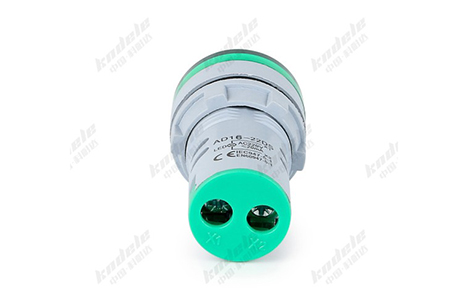 Visual Power Status Indication
The most common application of AC power indicator lights in control panels is to show whether a circuit or system is powered on. This helps:
Quickly identify live circuits
Avoid accidental contact with energized components
Reduce troubleshooting time for maintenance staff
By providing a clear visual signal, these indicators enhance safety and operational efficiency.
Industrial control panels often manage multiple machines and processes simultaneously. AC power indicator lights help:
Indicate whether a specific machine or subsystem is powered
Signal standby or operational states with different colored indicators (e.g., green for running, red for stopped or fault)
Provide real-time visual feedback to operators without opening panels or using testing tools
This improves workflow efficiency and reduces downtime caused by equipment mismanagement.
In combination with sensors and relays, AC power indicator lights can highlight abnormal conditions:
Red or amber lights indicate faults, overloads, or system warnings
Dual-color LEDs can differentiate between normal operation and error states
Helps maintenance teams respond quickly to electrical issues
By integrating indicator lights into fault monitoring, control panels become safer and easier to manage.
For three-phase industrial systems, AC power indicator lights can:
Show the presence of voltage on each phase
Indicate phase imbalance or loss
Help electricians and operators quickly identify potential problems
This application is especially important in motors, pumps, and heavy machinery, where phase monitoring prevents equipment damage.
AC power indicator lights improve the human-machine interface (HMI) by providing intuitive, at-a-glance information:
Multiple indicators can represent different circuits or functions
Color-coded LEDs convey operational, standby, or fault conditions
Improves safety compliance and reduces the likelihood of operator errors
In industrial environments, these visual cues are essential for both productivity and accident prevention.
Indicator lights also play a role in maintenance planning:
Allow operators to visually monitor equipment without invasive testing
Help identify circuits that are consistently overloaded or prone to failure
Reduce the need for extensive troubleshooting, saving time and costs
With proper use, AC power indicator lights contribute to proactive maintenance strategies.
AC power indicator lights may seem small, but their role in industrial control panels is significant. From simple power-on indication to fault signaling, phase monitoring, and preventive maintenance support, these lights improve safety, efficiency, and operational reliability in industrial settings.
By understanding their applications, engineers, electricians, and operators can design control panels that are safer, easier to maintain, and more intuitive to operate.
1.What is the main purpose of AC power indicator lights in control panels?
Their primary function is to provide a visual signal of power status, allowing operators to quickly see whether a circuit or machine is powered on.
2.Can AC power indicator lights indicate faults or system errors?
Yes. When combined with sensors or relays, red or amber lights can indicate faults, overloads, or abnormal conditions. Dual-color LEDs can show normal versus error states.
3.Are AC power indicator lights suitable for three-phase systems?
Absolutely. They can monitor voltage presence on each phase and help detect phase imbalance, loss, or other potential issues, which is crucial for heavy machinery and motors.
4.What colors are commonly used and what do they mean?
Red: Warning, fault, or power on (depending on setup)
Green: Normal operation
Yellow/Amber: Standby or caution
Blue: Auxiliary or special function
5.How do indicator lights support preventive maintenance?
They allow operators to monitor equipment visually without invasive testing, helping to identify overloaded circuits or potential failures early and reduce downtime.
6.Are LED indicators better than neon for industrial control panels?
LEDs are energy-efficient, long-lasting, and highly visible, making them ideal for modern industrial environments. Neon lights are simple, reliable, and suitable for older or low-power equipment.

