In the fast-paced world of industrial automation, understanding the various proximity switch types is essential for ensuring accurate object detection, seamless machine positioning, and robust safety systems. Also known as non-contact sensors or “prox switches” in industry slang, these components operate without physical contact, making them ideal for smart manufacturing and maintenance-free environments.
Whether you’re integrating them into automated assembly lines, robotic arms, conveyor belt systems, or access control solutions, each type of proximity switch—inductive, capacitive, ultrasonic, photoelectric, or magnetic—brings distinct advantages in terms of sensing range, switching frequency, and target object compatibility.
This comprehensive guide will explore the top 5 proximity switch types, their working principles, industrial applications, and practical tips for selecting the right switch for your next project.
A proximity switch, also called a proximity sensor, is a device that detects objects without making physical contact. These sensors are a game-changer in industrial automation, offering non-contact detection that reduces wear and tear and increases service life.
For example, you’ve probably seen them in action when automatic doors magically slide open as you approach. That’s a proximity switch at work!
Depending on the type, proximity switches can detect metallic objects, non-metallic materials, or even liquids. Now, let’s break down the top 5 proximity sensor types so you can choose the right one for your project.
 source:eltra-trade
2. Five Different Types of Proximity Switches
Let’s explore the top five proximity switch types, each with its unique features and use cases from the real world.
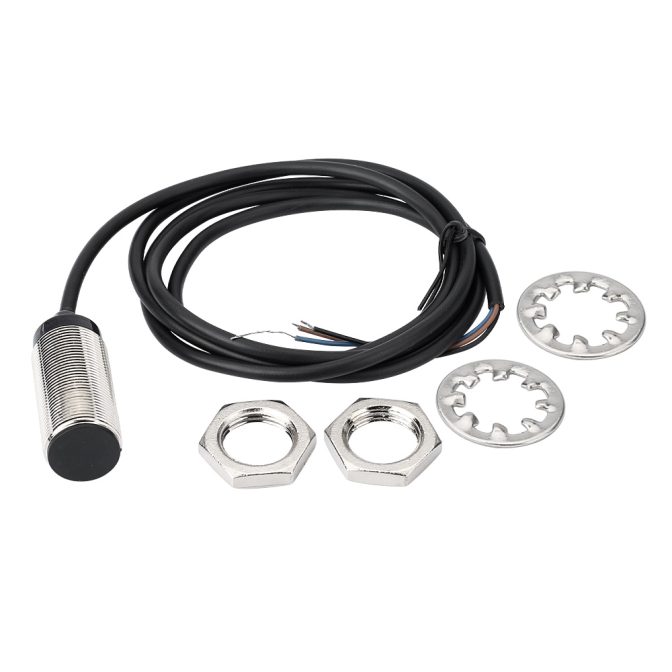
Inductive proximity switches are widely regarded as the best solution for non-contact detection of metallic objects. These sensors operate based on the principle of electromagnetic induction, making them exceptionally reliable for short-range sensing tasks.
When the sensor is energised, an internal oscillator generates a high-frequency electromagnetic field near the sensing face. As a conductive metal target—such as iron, steel, or aluminum—enters this detection zone, it disturbs the field by generating eddy currents. These currents cause a measurable drop in the oscillator amplitude, which is then processed by the sensor’s internal circuit to trigger a digital output signal.
Thanks to their robust construction, resistance to dirt and oil, and immunity to non-metal interference, inductive proximity switches are ideal for applications demanding durability, precision, and maintenance-free operation.
These switches are robust, reliable, non-contact operation, and ideal for position sensing, object detection, and automated machinery. Its key features:
Detection Range: 1-50mm (varies by sensor size and frequency)
Target Material: Steel, aluminum, brass, copper
Environmental Resistance: High resistance to oil, dust, and vibrations, making them ideal for harsh industrial environments
Response Time: Fast switching speeds (typically 1-5 kHz), ensuring precise position sensing.
Example:
Imagine you’re running a production line with metal components. An inductive switch can detect when a part reaches a specific position, ensuring seamless automation.

2.2 Capacitive Proximity Switch
Capacitive proximity switches are unlike inductive switches, they are versatile and capable of detecting a wide range of materials, including metallic and non-metallic materials. Capacitive proximity switches work by changing the capacitance between two plates. When an object enters its electric field, the capacitance value changes. This change triggers the sensor. Therefore, they are effective in detecting a wide range of materials and are commonly used in presence detection, level sensing, and collision avoidance systems. Especially in industrial applications, NPN capacitive proximity sensors are very popular.
Example:
In food production, a capacitive proximity switch can check the presence of liquids in bottles. It’s perfect for detecting non-metallic materials, which inductive sensors would miss.

2.3 Photoelectric Proximity Switch
Photoelectric proximity switches use light to detect objects. They can emit and receive light and detect when an object interrupts the beam. Photoelectric sensors are divided into Through-beam sensors, Retroreflective sensors, and Diffuse sensors. Among them, the working principle of the reflective sensor is to use the sensor reflector to reflect light back to the sensor so that the sensor can detect the presence of the object based on the reflected light.
Photoelectric Proximity Switches are equipped with high-power light-emitting elements, which can work at a longer distance, thus avoiding wear and tear caused by direct contact with objects. Some Photoelectric Proximity Switches are also suitable for transparent objects such as glass or plastic and have a wide range of applications.
Example:
Have you ever noticed how elevators stop closing their doors when you step in? That’s a photoelectric effect sensor detecting you!

2.4 Magnetic Proximity Switch
Magnetic proximity switches, also called magnetic limit switches, detect the presence of magnetic fields or magnetically permeable objects. They consist of a reed switch or a Hall effect sensor, making them highly sensitive to magnetic fields. The sensors are triggered as long as a magnetic field (such as a magnet) is close, so they are very reliable and accurate, and the lack of physical contact reduces mechanical wear and increases service life.
These magnetic proximity switches are also widely used and are often used for speed sensing, door position sensing, and safety systems such as burglar alarms and cylinder piston position sensing in industrial automation.
Example:
In a pneumatic system, a magnetic proximity sensor detects when a cylinder is fully extended or retracted. This precision ensures smooth operation.
2.5 Ultrasonic Proximity Switch
Ultrasonic proximity sensors use sound waves to detect objects, similar to how bats navigate in the dark. They emit high-frequency sound waves and measure the time it takes for the waves to bounce back after hitting an object, determining the distance to the object. It’s perfect for measuring distances and detecting transparent or reflective materials.
Ultrasonic sensors are effective at detecting a wide range of materials and are commonly used in presence detection, level sensing, and collision avoidance systems. At the same time, because sound waves have good penetration and can travel long distances through the air, they are also very suitable for adapting to harsh environments, such as dust, haze, or dirty environments, and for large-scale measurements.
Example:
An ultrasonic sensor is ideal for measuring the liquid level in a tank without touching the liquid itself. It’s a non-intrusive, highly accurate solution.
How to Choose the Right Proximity Sensor?
Selecting the right proximity sensor depends on several key factors, including target material, sensing distance, environmental conditions, and cost. The following table provides a comparison of different proximity sensor types to help guide your decision:
| Feature |
Inductive |
Capacitive |
Photoelectric |
Ultrasonic |
Magnetic |
| Target Material |
Metal only |
Metal & non-metal |
Any solid object |
Solid & liquid |
Magnetic objects |
| Sensing Distance |
1-50mm |
1-50mm |
10mm-50m |
10mm-5m |
1-60mm |
| Response Time |
Fast (1- 5 kHz) |
Medium (0.1- 1 kHz) |
Fast (1- 10 kHz) |
Slow (100- 500ms) |
Medium (1- 5ms) |
| Environmental Resistance |
Excellent (dust, oil, vibration) |
Moderate (affected by humidity) |
Affected by ambient light |
Works in dirty environments |
Immune to electrical noise |
| Best Use Cases |
Automated machinery, welding |
Liquid level detection, food packaging |
Object detection, conveyor belts |
Distance measurement, tank level sensing |
Security systems, door sensors |
Pro Tip: If you need metal detection in high-speed environments, choose inductive sensors. For detecting liquids or non-metal objects, capacitive or ultrasonic sensors are better choices.
FAQS
Q: Can proximity switches detect all types of materials?
A: Different types of proximity switches are designed to detect specific materials. Inductive switches detect metals, capacitive switches detect both metals and non-metals, and photoelectric and ultrasonic switches can detect a wide range of materials.
Q: What is the purpose of a proximity sensor?
A: The purpose of proximity sensors is to detect the presence of an object without physical contact, triggering an action when an object enters their detection range, and providing a signal for the automation system to react accordingly. They are used to enhance safety, improve efficiency, and reduce wear and tear in a variety of industrial and technological applications.
Q: What is the proximity sensor sensing range?
A: The sensing range of a proximity switch depends on its type, design, and application. Here are the typical sensing ranges of several common proximity switches:
Inductive proximity switches: These sensors use an electromagnetic field to detect the presence of metal objects. Their sensing range is usually 1-15 mm.
Capacitive proximity switches: These sensors use an electrostatic field to detect the presence of conductive or dielectric materials. Their sensing range is usually 1-50 mm.
Photoelectric proximity switches: These sensors use a light beam to detect the presence of an object. Their sensing range depends on the type of sensor (transmissive, reflective, diffuse) and the light source. The sensing range is usually 10-50000 mm.
Magnetic proximity switches: These sensors work by detecting the presence of a magnetic field. Magnetic sensors can detect magnetic fields within 1 to 60 mm. Some specific models of magnetic sensors can have a maximum sensing distance of up to 120 mm.
Q:What is the difference between inductive and capacitive sensors?
A: Inductive sensors detect only metals, while capacitive sensors detect both metals and non-metals.
Conclusion
Proximity switches are an essential part of modern industrial automation, offering a range of solutions for detecting objects without physical contact. There’s a perfect switch for every job, whether it’s an inductive switch for metal, a photoelectric cell sensor for objects, or an ultrasonic sensor for distance measurement.
That’s all from me for now. If you have any more questions or need further insights, feel free to reach out.

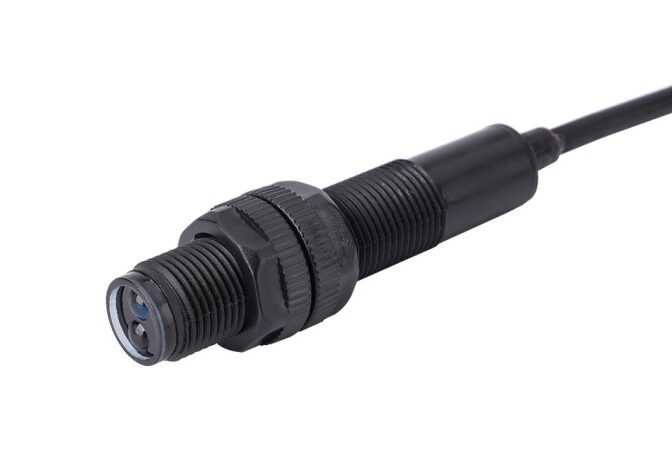
 How Does a Photoelectric Switch Work?
 Guangzhou Automation Industry Exhibition