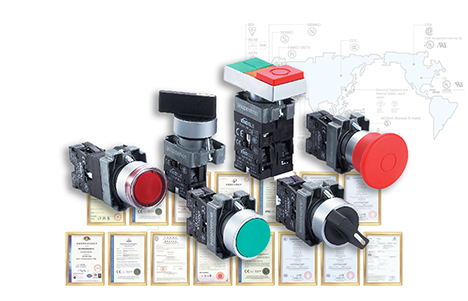
A Guide to Main Safety Standards & Certifications

Introduction:

In the modern electrical world, whether in industrial equipment, household appliances, or consumer electronics, the seemingly insignificant “push button switch” is the first line of defense ensuring the safe operation of the entire system. As a professional button switch manufacturer with decades of experience, we understand that safety is never an option; it is a mandatory commitment. Today, let’s delve into the main safety standards and certifications required for exporting button switches globally.

Why are Safety Certifications So Important?

A safety certification is more than just a mark on a product or a piece of paper. It represents:

  • Compliance:Meeting the legal and regulatory requirements of the target country or region is a mandatory entry ticket to the market.
  • Safety:Proving that the product has passed rigorous tests in design, materials, and manufacturing, effectively preventing risks like electric shock, fire, and mechanical hazards.
  • Quality Assurance:It is powerful proof of reliable product quality and stable performance, enhancing customer trust and brand image.
  • Global Access:It is the “passport” for a product to move freely in the global marketplace.

A Snapshot of Key Safety Certifications for Major Global Markets

Different countries and regions have established different certification systems based on their development levels and regulatory frameworks. The following chart clearly illustrates the core certifications required for exporting button switches to major world regions:
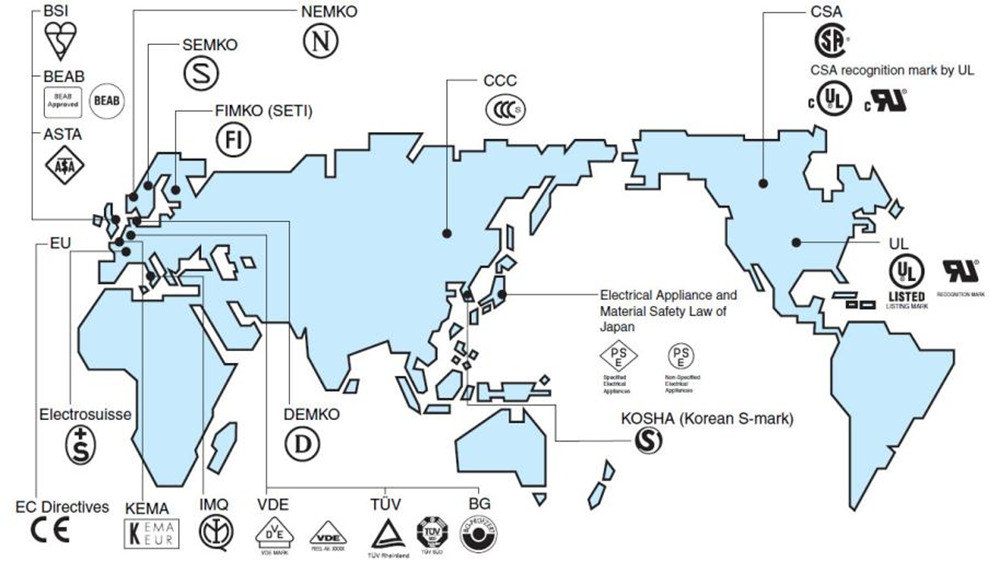
Name National Standards Country Description Certification Body Certification Mark
IEC – International Technical electric standards based on the most recent scientific technology. Forms the basis for standards in other countries. – –
UL ANSI Standards United States To prevent fires, standards are enforced for the sale of electric products in the USA by state and city.
Components must also be certified.
UL  

CSA CSA Standards Canada North American safety standards are applied and operated to prevent fire accidents, in the same way as in the USA. CSA  


EU EN Standards Europe Standards are designed to prevent electric shock and fires, but are not legally enforced.
Enforcement is achieved through strict penalties.
VDE, TUV-Rh  

CCC Chinese National Standards:
GB Standards
China Items for which certification is enforced are specified, and the import and sale of uncertified items in China is prohibited. CCC  


IEC International Electrotechnical Commission CE Conformité Européene
ISO International Organization for Standardization VDE Verband Deutscher Elektrotechniker
UL Underwriter’s Laboratories Inc. TUV-Rh Technischer Überwachungsverein rheinland
CSA Canadian Standards Association UKCA United Kingdom Conformity Assessed
EN Europäische Norm=European Standard CCC China Compulsory Certification
EU European Communities EAC Eurasian Economic Union

In-Depth Look at Core Product Certifications

For the Chinese Market: CCC Certification

Nature: Compulsory

Covered Products: Electrical products listed in the “Compulsory Product Catalog.”

Standard Example: GB 14048.5 (Low-voltage switchgear and controlgear – Control circuit devices and switching elements)

Key Point: Products cannot be sold or distributed in the Chinese market without CCC certification.
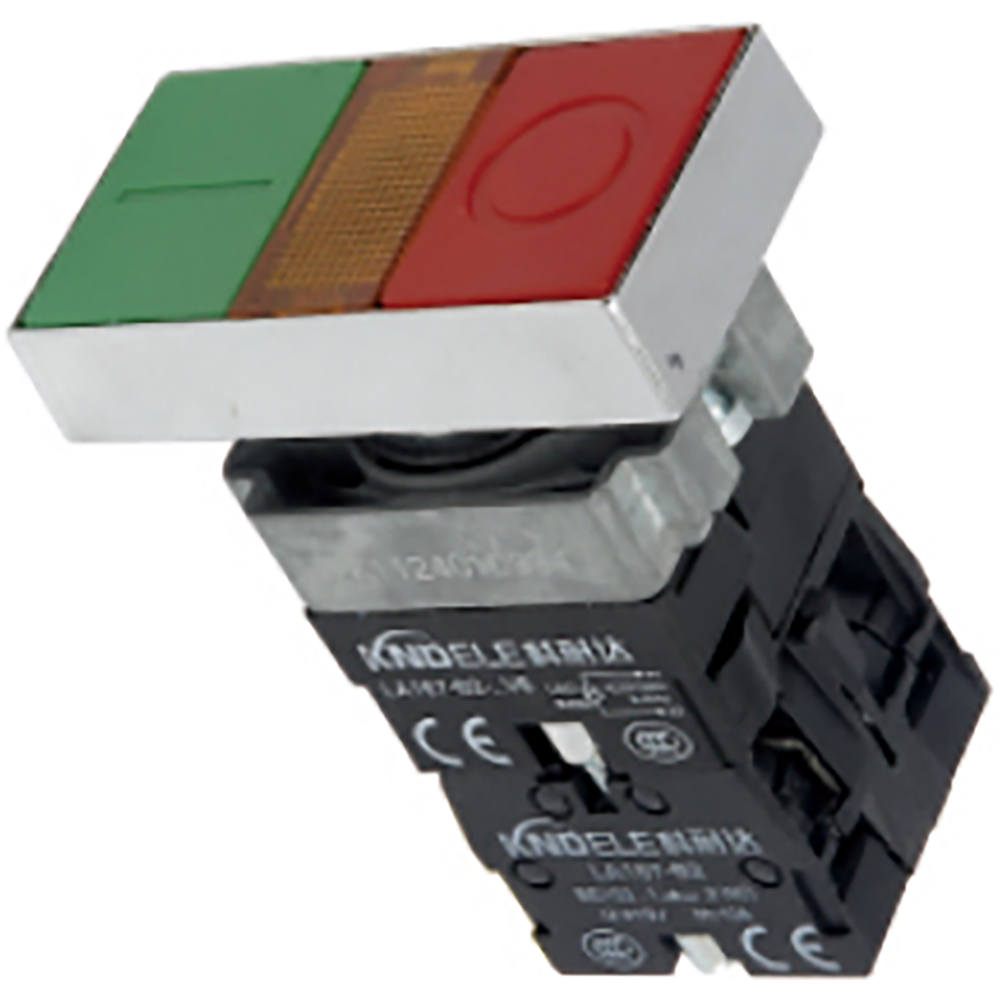
For the European Market: CE Certificate & TUV Certificate

CE Certificate:

Nature: Mandatory self-declaration mark.

Core Directives: Low Voltage Directive (LVD), Electromagnetic Compatibility Directive (EMC), etc.

Key Point: Affixing the CE mark indicates the product conforms to all relevant EU legislation, serving as its legal “passport” into the EU.
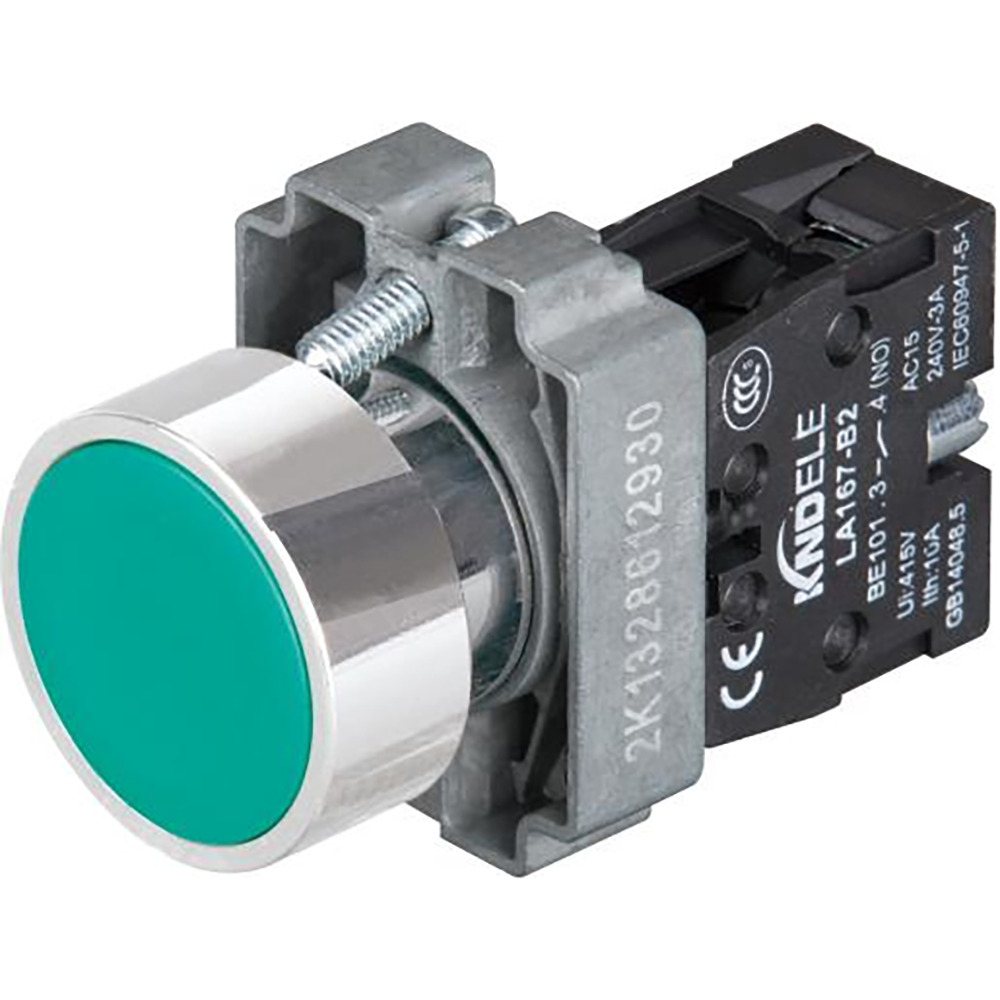
TUV and Other Notified Body Certifications:

Nature: Non-mandatory but highly authoritative third-party certification.

Explanation: While manufacturers can self-declare CE conformity, certification from renowned bodies like TUV Rheinland or TUV SUD significantly boosts customer confidence by proving the product has undergone independent, rigorous testing.

For the North American Market: UL/cUL and ETL Certification

◆ UL/cUL Certification:

Nature: While not entirely mandatory by law, it is widely adopted by codes and the market, making it a “de facto mandatory standard.”

Standards: UL 61058 (aligned with IEC 61058), etc.

Key Point: The cUL mark indicates compliance with Canadian standards. The UL mark has extremely high recognition in the North American market.

◆ ETL Certification:

Nature: A North American safety certification equivalent to UL, also recognized by OSHA (Occupational Safety and Health Administration).

Key Point: Provides manufacturers with an efficient and reliable alternative certification choice.

Global Passport: CB Scheme

Nature: An international mutual recognition system.

How it Works: Based on IEC International Standards (e.g., IEC 61058-1). A manufacturer obtains a CB Test Report and Certificate from an NCB (National Certification Body) in one country, which is then recognized by other member countries, significantly simplifying the process and reducing costs for obtaining national certifications elsewhere.

Key Point: “One Test, Global Acceptance” – it is the best shortcut for exporting to multiple countries.

For the Russian/Eurasian market: EAC Certificate

Nature: A mandatory assessment process that proves products comply with the technical regulations of the Eurasian Economic Union (EAEU).

The Geographic Scope: The EAC certificate allows a product to be imported and sold in any of the five member states of the EAEU without needing separate national certifications for each country. The member states are: Russia, Belarus, Kazakhstan, Armenia, Kyrgyzstan

Explanation: Most consumer and industrial goods require EAC certification, including:  Machinery and industrial equipment, Low-voltage electronics (computers, phones, appliances), Food products and additives, Cosmetics and perfumes, Clothing and footwear (especially for children), Furniture, Toys.

Key point: One Document = Five Countries. It is your single “passport” for your goods to enter the entire Eurasian market legally.

International Management System Certifications

In addition to the product-specific safety certifications mentioned above, Management System Certifications that reflect a company’s overall strength are equally crucial. They demonstrate that our factory meets international standards in quality, environment, and social responsibility.

Certification Core Focus Value to Our Customers
ISO 9001 Quality Management System Ensures we consistently provide products that meet customer and regulatory requirements, with stable processes and reliable quality.
ISO 14001 Environmental Management System Demonstrates our commitment to environmental protection during production, positioning us as a responsible and sustainable partner.
ISO 45001 Occupational Health & Safety Management System Protects the health and safety of our employees, reflects our people-oriented care, and ensures production stability and product quality from the source.

Our Commitment: Building Your Foundation of Safety with Authoritative Certifications

After learning about all these certifications, you might ask: “So, does your factory possess these qualifications?”

We are proud to tell you: Yes, we have them!
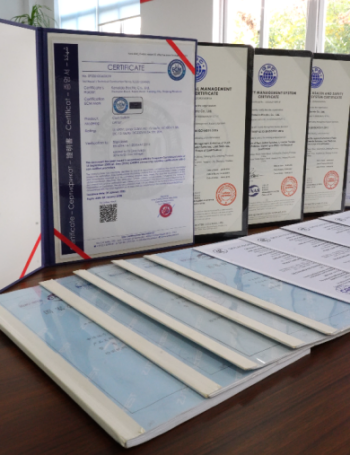
As a leader in the industry, our pursuit of quality and safety never stops. Our button switch products have comprehensively passed:

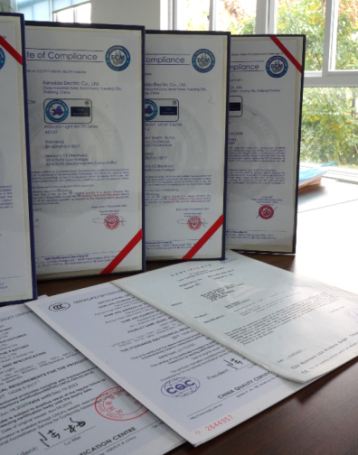
Multiple international product safety certifications, including CCC, CE, TUV, and CB.

Our factory has established robust management systems and has been certified to international standards including ISO 9001, ISO 14001, and ISO 45001.

These certificates are not just framed on the wall; they are integrated into every step of our process, from design and material selection to production and testing. Choosing us means you are not just selecting a button switch; you are selecting a solemn commitment to safety, a passport for smooth global access, and a stable, long-term partnership.

Contact us today and let our safety-compliant switches safeguard your products!

How to Choose the Right Metal Push Button Switch for Your Control Panel

Introduction

A metal push button switch is a durable and versatile control device commonly used in industrial panels, machinery, access control systems, automotive electronics, and smart devices. Choosing the right switch ensures your control panel push button switch delivers the expected performance, safety, and longevity.

Due to their superior durability and tactile feedback, metal push buttons have become the preferred choice over plastic switches in many demanding environments.

Understand the Basics of Metal Push Button Switches

Core Definitions

Metal push button switch: A switch with a metal housing designed for repeated mechanical actuation.

Metal push button / Metal button switch: General terms referring to the same component.

Functions include controlling power, mode switching, signal triggering, and system activation.

Typical components:

Metal housing (stainless steel, aluminum, or zinc alloy)

Actuator button

Contact mechanism (momentary or latching)

Optional LED indicator

Terminals (solder, screw, or quick-connect)

Why Use Metal Instead of Plastic?

Metal push buttons offer several advantages:

Greater durability and impact resistance

Superior corrosion resistance

Longer mechanical life

Stronger waterproof and dustproof performance

Premium tactile feel and appearance

Ideal for industrial, outdoor, or heavy-use environments

Choose the Right Action Type

Action type is one of the most critical parts of push button switch selection.

Momentary vs Latching Push Button

Momentary metal push button
The switch remains active only while pressed.
Ideal for:

Machine start control

Reset functions

Test operation

Signal sending

Latching metal push button
Press once to activate and press again to deactivate.
Ideal for:

Power on/off

Mode switching

Lighting and device control

Understanding your application ensures you choose the correct actuation behavior.

Select the Appropriate Material

Different materials deliver different levels of durability and corrosion resistance.

Stainless Steel Push Button Switch

Excellent corrosion resistance

Suitable for outdoor, marine, food processing, and industrial environments

Supports heavy-duty operation

Aluminum Alloy & Zinc Alloy Options

Lightweight

Cost-effective

Available in multiple anodized colors

Suitable for indoor equipment and consumer electronics

Vandal-Proof Push Button Choices

Reinforced metal structure

Anti-drill and anti-impact design

Perfect for:

Public kiosks

Access control

Transportation terminals

Vending machines

Waterproof and Environmental Protection Requirements

IP Rating Explained

To ensure reliable operation, your switch should match the environment’s protection needs.

Key rating:

IP67 push button switch

Fully dustproof

Protected against water immersion

Ideal for outdoor, industrial, and wet environments

Temperature, Chemical, and Impact Resistance

Consider:

Operating temperature range

Exposure to chemicals, oils, or cleaning agents

Shock and vibration levels in industrial equipment

Electrical Specifications to Consider

Voltage Requirements

Metal push buttons are available in various voltage types:

12V metal push button switch (common for automotive & low-voltage systems)

24V, 36V DC

AC 110V / AC 220V

Choose the voltage rating that matches your control panel design.

Current Rating and Switching Capacity

Check:

Contact rating (e.g., 3A, 5A, 10A)

Type of load (resistive, inductive, capacitive)

Whether the switch will control a relay, motor, or direct load

Under-rated switches may overheat or fail prematurely.

Mechanical Specifications for Control Panel Integration

Mounting Hole Size

The most common standards include:

22mm metal push button switch

19mm

16mm

25mm

Ensure the mounting hole matches your control panel thickness and drilling standards.

Terminal Types

Screw terminals (easy installation)

Solder lugs (compact)

Faston terminals (quick-connect)

Choose based on wiring preferences and panel layout.

Illumination and Indicator Options

LED Ring Push Button Switch

Illuminated switches enhance visibility and user interaction.

Options include:

Dot LED

LED ring push button switch

Halo ring

RGB multi-color illumination

LED indicators help users identify system status or operating mode.

Backlit Symbol Styles

Common symbols:

Power icon

Arrow

Bell

ON/OFF text

Custom logos

These improve usability and reduce operator errors.

Industrial-Level Reliability Considerations

To ensure long-term performance:

Check mechanical lifespan (e.g., 500,000–1,000,000 cycles)

Evaluate contact durability

Look for certifications: CE, RoHS, UL (optional)

Confirm shock and vibration ratings for industrial applications

A reliable industrial push button switch reduces downtime and maintenance costs.

Choosing the Right Supplier

A trustworthy supplier ensures product consistency and long-term support.

Key factors:

Quality material verification

Comprehensive testing (waterproof, impact, aging, electrical)

Availability of customization (LED color, voltage, symbols)

Good stock and fast delivery

Technical support & product documentation

Selecting the right supplier ensures your control panel performs reliably under all conditions.

FAQ

Should I choose momentary or latching for my control panel?

Choose momentary for temporary actions like start/reset, and latching for on/off control.

What is the most common mounting size?

The 22mm metal push button switch is the most widely used in industrial control panels.

Do I need an IP67 metal push button switch?

Choose IP67 if the panel is exposed to water, dust, or outdoor environments.

Can metal push button switches be used for low-voltage systems?

Yes, 12V metal push button switches are suitable for automotive, marine, and low-voltage circuits.

What makes a push button “vandal-proof”?

It features a hardened stainless-steel shell, anti-impact design, and no protruding edges.

Conclusion

Choosing the right metal push button switch requires careful consideration of action type, material, IP rating, voltage, mounting size, illumination, and reliability. With proper push button switch selection, your control panel will operate safely, efficiently, and reliably under all conditions.

Whether you need a stainless steel push button switch for industrial equipment or a waterproof IP67 push button switch for outdoor use, understanding these key factors ensures you select the perfect solution for your application.

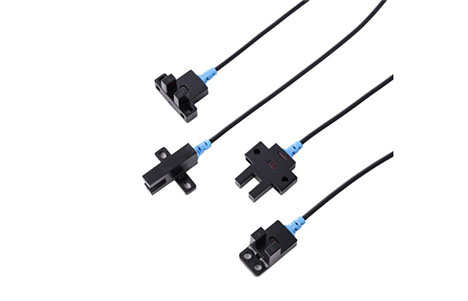
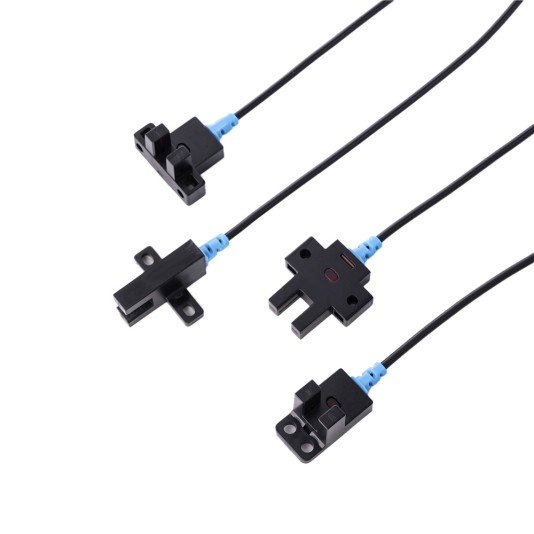
How to Choose the Right Photoelectric Switch for Your Application

Introduction

In modern industrial automation, photoelectric switches (also known as photoelectric sensors) play a critical role in detecting objects, monitoring positions, and ensuring efficient production processes. With a wide range of types and features available, it can be challenging to select the right sensor for your application. This guide will help you understand the fundamentals of photoelectric switch selection and provide practical tips to choose the perfect sensor for your needs.

What Is a Photoelectric Switch and How Does It Work?

Photoelectric Switch Working Principle

A photoelectric switch detects objects using a light beam. The sensor emits a light signal, which can be reflected off or interrupted by an object. When the sensor detects a change in the light beam, it sends an electrical signal to the connected control system. This photoelectric detection method allows for non-contact detection, making it ideal for high-speed or delicate applications.

Key Components

A typical photoelectric sensor includes:

Emitter: Sends out the light beam.

Receiver: Detects reflected or interrupted light.

Amplifier Circuit: Converts the light signal into an electrical output for your control system.

Detection Modes

Most photoelectric switches operate in two detection modes:

Light-ON: The sensor outputs a signal when light is detected.

Dark-ON: The sensor outputs a signal when the light is blocked.

Understanding these modes is crucial for proper installation and reliable operation.

Main Types of Photoelectric Switches

Overview of Sensor Types

There are three main types of photoelectric switches, each designed for different industrial applications.

Through-Beam Photoelectric Switch

Uses separate emitter and receiver units.

Offers high accuracy and long detection range.

Ideal for conveyor systems and applications where precision is critical.

Retroreflective Photoelectric Switch

Uses a reflector to bounce light back to the sensor.

Easier to install than through-beam types.

Suitable for moderate-range object detection where space is limited.

Diffuse Photoelectric Sensor

Detects objects based on reflected light from the object itself.

Simple installation and cost-effective.

Best for detecting objects at short distances or varying sizes.

Comparison

Type Detection Range Installation Accuracy Common Applications
Through-Beam Long Medium High Conveyor lines, packaging
Retroreflective Medium Easy Medium Assembly lines, automation gates
Diffuse Short Easy Medium Product detection, small parts

Key Features and Specifications to Consider

When selecting a photoelectric switch, consider the following features:

Sensing Distance and Detection Range

Choose a sensor that covers the required distance without false triggers.

Response Speed

Ensure the sensor reacts quickly enough for high-speed operations.

Output Type

Match the output to your control system for seamless integration.

Light Source

Infrared, visible, or laser options depending on the detection environment.

Environmental Resistance

Sensors must withstand dust, moisture, vibrations, and temperature variations.

Additional Features

Sensitivity adjustment, background suppression, and industrial photoelectric switch certifications can improve reliability.

Photoelectric Switch vs Mechanical Switch

Advantages of Photoelectric Switches

Non-contact detection reduces wear and maintenance.

Longer lifespan and faster response compared to mechanical switches.

Can detect transparent or reflective objects that mechanical switches cannot.

Limitations

Sensitive to environmental interference like strong ambient light.

Requires precise alignment in some configurations.

May be affected by reflective surfaces or dust accumulation.

Typical Applications of Photoelectric Sensors

Manufacturing & Packaging

Counting products, detecting alignment, and ensuring proper placement on conveyor lines.

Automotive Industry

Detecting objects on assembly lines for automated positioning and quality control.

Logistics & Conveyors

Monitoring object presence and movement for inventory management.

Photoelectric switches provide reliability and versatility, making them ideal for a wide range of industrial applications.

Step-by-Step Selection Guide

Define your detection target: Consider material, size, color, and distance.

Choose the detection mode: Through-beam, diffuse, or retroreflective based on your needs.

Match sensor output and response speed: Ensure compatibility with your control system.

Consider environmental conditions: Light, dust, temperature, and vibration factors.

Evaluate installation space and mounting position: Check for physical constraints.

Use a selection checklist: Simplifies decision-making and reduces errors.

Following these steps ensures you choose the right photoelectric switch for optimal performance.

FAQ

Q1: What are the main types of photoelectric sensors?
A1: Through-beam, retroreflective, and diffuse photoelectric switches.

Q2: How do Light-ON and Dark-ON modes differ?
A2: Light-ON outputs a signal when light is detected; Dark-ON outputs when light is blocked.

Q3: How do photoelectric switches differ from mechanical switches?
A3: Photoelectric switches are non-contact, faster, and more durable, while mechanical switches are prone to wear.

Q4: Can photoelectric sensors detect transparent objects?
A4: Certain models, especially with specialized light sources or background suppression, can detect transparent or reflective materials.

Conclusion

Choosing the right photoelectric switch is crucial for efficient and reliable industrial automation. By understanding the working principles, types, features, and environmental considerations, you can select the best photoelectric sensor for your application. Proper selection reduces downtime, improves accuracy, and ensures long-term performance.

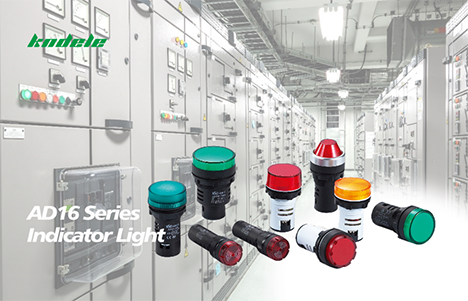
The Impact of Indicator Lights in Modern Industries

As a manufacturer deeply embedded in the world of industrial signaling, we have a front-row seat to the silent yet profound revolution led by a seemingly simple component: the indicator light.

Often overlooked, these small beacons of light are the unsung heroes of modern automation, the silent communicators on the factory floor, and a critical layer of safety across countless industries. Their impact is far greater than just a simple “on” or “off” signal.

The Language of Machines: Enhancing Operational Efficiency

In the complex symphony of a manufacturing plant, machines need to communicate with operators instantly and unambiguously. Indicator lights provide this universal language.

Status Reporting: A steady green light means “System Normal.” A flashing amber light signals “Warning, Change Needed Soon.” A solid red light screams “Fault, Immediate Attention Required!” This allows operators to assess the health of an entire production line at a glance, drastically reducing diagnostic time and preventing costly downtime.

Process Guidance: On assembly lines, indicator lights guide operators through complex sequences, indicating which part to pick, where to place it, and when a task is complete. This reduces errors and accelerates training for new personnel.

The Guardian of Safety: Preventing Accidents and Saving Lives

This is perhaps the most critical role of industrial signal lights. They form a vital part of safety systems, protecting both people and equipment.

Hazard Warning: Bright, red rotating beacons or strobes are often paired with alarms to signal the activation of heavy machinery, such as robots or presses, warning personnel to stay clear.

Emergency Stop Indication: When an E-stop button is pressed, a corresponding light illuminates to clearly identify which station initiated the shutdown, allowing for a swift and targeted response.

Environmental Monitoring: In hazardous environments (e.g., chemical plants, mining), specific colored lights indicate gas leaks, high temperatures, or other dangerous conditions, enabling immediate evacuation or corrective action.

The Bridge of Human-Machine Interaction (HMI)

As factories become smarter with Industry 4.0 and the Internet of Things (IoT), indicator lights are evolving from simple bulbs into intelligent data visualization tools.

Multi-Color & Smart LEDs: Modern LED indicators can display a spectrum of colors, each representing a different data point or machine state, conveying more information without taking up more panel space.

Integration with IoT: These lights can now be connected to network systems. An operator might receive a text alert for a machine fault, but the first and most immediate notification is still that bright red light on the machine itself, providing instant local awareness.

Conclusion

From the humble single-color bulb to today’s multi-color, network-connected LED beacons, indicator lights have remained an indispensable component in industrial design. They are the eyes of the machine, translating complex data into simple, intuitive visual cues. At KNDELE, we don’t just see ourselves as manufacturing lights; we see ourselves as manufacturing clarity, safety, and efficiency.

They are a small part with a massive impact, truly illuminating the path to a smarter, safer, and more productive industrial world.