


In modern industrial automation, countless sensors, controllers, and machines work together to keep production lines running efficiently and safely. Despite the complexity of these systems, one of the simplest components—the pilot lamp—remains indispensable. These small indicator lights provide real-time visual feedback that helps operators monitor equipment status, identify faults, and ensure smooth plant operation.
So why are pilot lamps still essential in today’s high-tech industrial environments? This article explains their importance, functions, and the advantages they bring to automation systems.
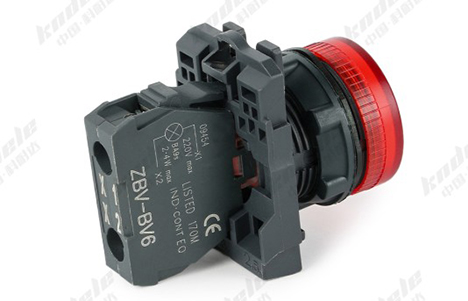 What Is a Pilot Lamp?
A pilot lamp, also known as an indicator light, is a small device installed on control panels, operator consoles, machinery, and switchboards. It illuminates to communicate specific equipment conditions such as:
Power ON/OFF
Motor running
System faults or alarms
Operation modes
Standby or emergency status
Although simple, pilot lamps play a critical role as the “visual language” of industrial automation.
Automation systems are complex, but operators need simple and direct feedback. Pilot lamps provide:
Instant visibility from a distance
Color-coded status identification
Non-verbal communication that requires no specialized knowledge
For example:
Green → Machine running normally
Red → Fault or emergency
Yellow → Warning or standby
This real-time clarity helps operators react quickly, preventing delays and accidents.
Safety is the top priority in any factory. Pilot lamps improve safety by:
Indicating live circuits or high voltage
Signaling machine motion or hazards
Alerting workers during emergency stops
Minimizing the need to open control cabinets
A simple illuminated signal can prevent accidental contact with energized equipment or moving machinery—especially in high-risk environments.
When a fault occurs, time is critical. Pilot lamps help maintenance teams pinpoint issues quickly by:
Highlighting which circuit or component has failed
Showing abnormal conditions instantly
Reducing the need for disassembly or measurement tools
A red pilot lamp on a motor starter panel, for instance, immediately directs technicians to the issue, reducing downtime and maintenance cost.
Automation often involves dozens or hundreds of interconnected devices. Pilot lamps simplify monitoring by:
Showing the running status of individual machines
Providing feedback on control logic
Indicating the sequence of operations
Helping operators oversee processes with minimal training
In fast-paced industrial environments, visual cues are far more efficient than checking software logs or terminal displays.
Pilot lamps serve as a fundamental part of HMI design. They help create:
Intuitive control panels
User-friendly machine interfaces
Clear operational flow
Operators can understand machine conditions at a glance, even in noisy or low-light environments where buzzers or displays may not be effective.
Industrial environments can involve vibration, dust, humidity, and temperature extremes. Modern LED pilot lamps offer:
Long lifespan (up to 50,000 hours)
Strong resistance to mechanical shock
Low power consumption
Stable brightness and color
Compatibility with AC/DC voltages
This makes them durable, low-maintenance components ideal for 24/7 production.
Pilot lamps require:
No programming
Minimal wiring
Low installation cost
Little to no maintenance over time
For manufacturers looking to increase system reliability without adding complexity or expense, pilot lamps offer an excellent value.
Common Applications of Pilot Lamps in Automation
Pilot lamps appear in nearly every part of an industrial facility, including:
Motor control centers
Conveyors and automated machinery
Pump and fan systems
Power distribution panels
PLC control cabinets
Elevator control rooms
Safety and emergency shutdown systems
Wherever equipment needs status visibility, pilot lamps are present.
Pilot lamps may be one of the simplest components in an industrial automation system, but their importance cannot be overstated. They provide clear, immediate status indication, enhance safety, simplify troubleshooting, and support efficient system monitoring. In an era where automation continues to grow more advanced, pilot lamps remain a foundational element of effective and reliable industrial operations.

