


Electrical push button switches are fundamental components in both industrial and residential electrical systems. Despite their small size, they play a crucial role in controlling circuits, machinery, and devices. Understanding the types, functions, and applications of these switches is essential for engineers, electricians, and hobbyists alike.
 What is an Electrical Push Button Switch?
An electrical push button switch is a momentary or maintained switch that activates or deactivates a circuit when pressed. Unlike toggle switches, which maintain their position, push buttons can be designed to return to their default state immediately after being pressed or stay in their position until pressed again.
Compact design: Fits easily into panels and control boards.
Simple operation: Activated by a single push.
Versatility: Suitable for a wide range of applications, from home appliances to industrial machinery.
Electrical push button switches come in various designs, each suited for specific applications:
Definition: Activates the circuit only while being pressed.
Applications: Doorbells, keyboards, machine start buttons.
Example: A normally open (NO) push button closes the circuit only when pressed.
Definition: Changes the circuit state when pressed and retains that state until pressed again.
Applications: Power on/off switches, mode selectors.
Example: A push-to-lock switch used in industrial machines.
Definition: Includes a built-in light indicator that illuminates when the switch is activated.
Applications: Control panels, emergency stop systems, signaling devices.
Example: Start/stop buttons on production line machinery.
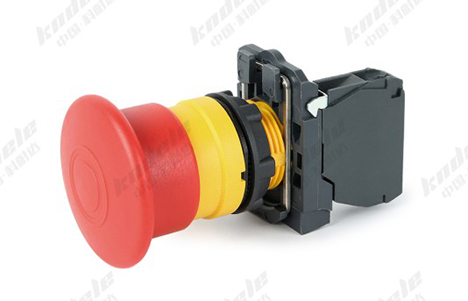
Definition: A large, easily accessible button designed to quickly stop machinery in an emergency.
Applications: Industrial machines, conveyor belts, robotic systems.
Safety Note: Often colored red and mushroom-shaped for visibility and accessibility.
Definition: Returns to its original position after being pressed, using a spring mechanism.
Applications: Momentary functions like resetting a device or triggering a short-term operation.
Push button switches are used for a variety of functions, including:
Circuit Control: Starting or stopping a circuit.
Mode Selection: Switching between different operating modes.
Signaling: Providing visual or audio feedback.
Safety Mechanisms: Emergency stops or resets.
Electrical push button switches are widely used across industries and applications:
Industrial Automation
Control machinery, conveyor belts, and robotic arms.
Ensure safety with emergency stop buttons.
Home Appliances
Activate appliances such as blenders, washing machines, and coffee makers.
Consumer Electronics
Keyboards, calculators, and gaming devices rely on precise push button switches.
Control Panels
Used in power plants, factories, and data centers to manage complex operations.
Automotive
Push start systems, horn switches, and lighting controls.
When selecting a push button switch, consider the following factors:
Electrical rating: Voltage and current capacity.
Switch type: Momentary or maintained.
Environment: Indoor or outdoor, temperature, humidity.
Safety requirements: Emergency stop or illuminated options.
Mounting style: Panel mount, PCB mount, or surface mount.
Electrical push button switches may seem simple, but they are versatile and essential components in modern electrical systems. By understanding the types, functions, and applications, you can select the right switch for your project, ensuring safety, reliability, and efficiency. Whether for industrial automation, home appliances, or electronics, push button switches remain a cornerstone of control systems.
A momentary switch only activates the circuit while being pressed and returns to its default state once released. A maintained switch changes the circuit state when pressed and keeps that state until pressed again.
Yes, but you must choose a switch with the appropriate voltage and current rating. Always check the manufacturer’s specifications to ensure safe operation.
An emergency stop (E-stop) push button is a safety device designed to immediately stop machinery or equipment during an emergency. They are usually red and mushroom-shaped for easy access.
Illuminated push buttons are not always required but are very useful in control panels and industrial environments, as they provide visual feedback indicating whether a circuit is active.

