


In modern industrial environments, reliability and efficiency are critical. Every component inside a control panel must not only perform flawlessly but also help streamline operations. Among the many control devices used in factories, automation lines, and machinery, the two way push button stands out for its compact design and dual-function operation.
This article explores the top advantages of using two way push buttons in industrial control systems and explains why they are widely preferred across manufacturing and automation industries.
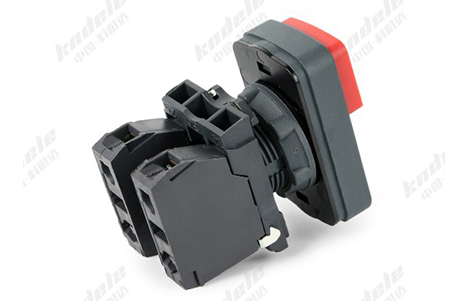 What Is a Two Way Push Button?
A two way push button is a dual-function control device that allows operators to manage two different actions from a single unit—such as Forward/Reverse, Up/Down, or Start/Stop.
With internal NO (Normally Open) and NC (Normally Closed) contact combinations, it supports multi-direction control while keeping panel layouts simple and intuitive.
Industrial control panels often have limited space, especially in equipment that requires many functions packed tightly together.
Two way push buttons combine two independent functions in one device, reducing the number of switches on the panel. This leads to:
Cleaner panel layouts
Easier operation
Reduced clutter and wiring complexity
For OEMs and panel builders, this advantage translates into more efficient layouts and lower installation costs.
A single two way push button replaces two separate switches, which means fewer wires, fewer contact blocks, and fewer installation steps.
Benefits include:
Faster assembly and commissioning
Reduced wiring errors
Lower labor costs
More reliable long-term performance
Especially in high-volume manufacturing, the time saved during assembly can significantly improve productivity.
Industrial operators often make quick decisions during machine operation. With a two way push button, users have access to two key functions from a single control point.
This improves:
Speed — operators can switch between functions quickly
Accuracy — intuitive layout reduces mistakes
Safety — clear directional control prevents accidental activation
Whether controlling conveyor directions, hoists, or motor movement, the dual-action design enhances workflow efficiency.
Because it eliminates the need for multiple individual switches, a two way push button reduces overall component costs.
Cost savings come from:
Fewer switches to buy
Less panel hardware
Reduced wiring accessories
Lower maintenance requirements
For factories with dozens or even hundreds of panels, these savings accumulate significantly.
Industrial environments often expose control devices to vibration, dust, moisture, and frequent operation.
Two way push buttons designed for industrial use typically feature:
Heat- and impact-resistant housings
Long mechanical life cycles
IP-rated protection
Robust internal contacts
Shock and vibration resistance
These characteristics ensure stable performance and prevent unexpected downtime.
Two way push buttons are commonly used for:
Motor Forward/Reverse control
Hoist Up/Down movements
Machine Start/Stop operations
Door Open/Close functions
Conveyor Left/Right direction changes
Their versatility makes them a core component in modern industrial automation.
Many two way push buttons have color-coded actuators or directional arrows, giving operators clear visual cues.
This improves safety by:
Preventing accidental activation
Reducing incorrect direction operations
Making emergency control more intuitive
In high-risk environments, clarity and speed can protect equipment—and workers.
Two way push buttons provide a powerful combination of functionality, efficiency, and reliability for industrial control systems. Their dual-action design helps reduce panel space, simplify wiring, enhance user experience, and improve overall system performance.
Given their durability and versatility, they remain a preferred choice in manufacturing, automation, material handling, and equipment control applications.
A two way push button allows operators to control two opposite or related functions—such as Forward/Reverse or Up/Down—from a single switch, improving efficiency and saving panel space.
Most industrial two way push buttons are momentary, meaning they return to their neutral position after being released.
However, latching versions do exist depending on the application requirements.
Not directly.
They typically control relays, contactors, or motor starters, which then manage the motor’s forward/reverse or start/stop functions. This ensures electrical safety and prevents overload.
The most common internal contact blocks are:NO (Normally Open)
NC (Normally Closed)
A two way push button may contain combinations of both to support dual-function control.

