


Selecting the right signal indicator light is essential for ensuring clear communication, operational safety, and long-term reliability in any electrical or industrial system. With a wide variety of options available—ranging from different voltages and colors to mounting styles and protection levels—making the right choice requires careful consideration of your specific application needs.
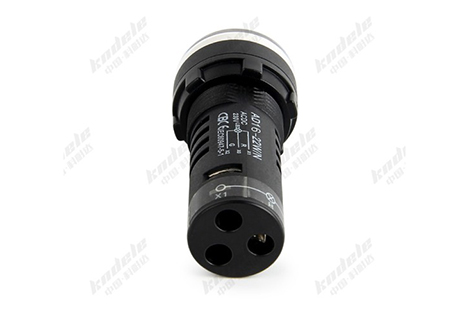
Start by identifying where and how the indicator light will be used. Different environments and systems have different demands:
Control panels require compact, panel-mounted lights
Industrial machinery may need high-brightness or rugged designs
Outdoor installations demand weather-resistant units
Hazardous areas require explosion-proof or specially certified lights
Understanding the application ensures you select a product that performs reliably under actual working conditions.
Signal indicator lights are available in various voltage ratings, such as:
12V / 24V (low-voltage control systems)
110V / 220V (standard industrial or commercial systems)
Always match the indicator light’s rated voltage with your system’s power supply to avoid malfunction or damage.
Color plays a critical role in communication. Following standard color conventions helps operators quickly understand system status:
Green: Normal operation / Power ON
Red: Fault / Emergency / Stop
Yellow (Amber): Warning / Standby
Blue: Special function or user-defined status
White: General indication or neutral status
Consistent color usage improves safety and reduces the risk of misinterpretation.
Modern systems typically favor LED indicator lights due to their advantages:
Long lifespan (often 50,000+ hours)
Low energy consumption
High brightness and visibility
Minimal heat generation
Traditional incandescent lights may still be used in some legacy systems, but LEDs are generally the better choice for most applications.
The visibility of the indicator light is crucial, especially in industrial environments:
Use high-intensity LEDs for bright or outdoor settings
Ensure visibility from required distances and angles
Consider diffused lenses to reduce glare
Proper brightness ensures that signals are clearly seen under all conditions.
If your project involves harsh environments, pay attention to the IP (Ingress Protection) rating:
IP65 or higher: Suitable for dust and water resistance
IP67/IP68: For more extreme or outdoor conditions
Also consider resistance to vibration, temperature fluctuations, and chemicals when necessary.
Indicator lights come in various mounting styles:
Panel-mounted (most common for control panels)
Surface-mounted (for external installations)
Flush-mounted (for a clean, integrated look)
Ensure the size (e.g., 8mm, 12mm, 16mm, 22mm) matches your panel design and space constraints.
Depending on your project, you may need advanced features such as:
Multi-color (RGB) indicator lights
Flashing or blinking modes for alarms
Built-in resistors or transformers
Custom symbols or labels on lenses
These features can enhance functionality and adaptability.
For industrial and commercial applications, it’s important to select products that meet relevant standards, such as:
IEC (International Electrotechnical Commission)
UL Underwriters Laboratories)
CE certification
Compliance ensures safety, quality, and compatibility with global systems.
While cost is always a consideration, choosing the cheapest option may lead to higher maintenance or replacement costs. Investing in high-quality signal indicator lights ensures:
Better reliability
Longer lifespan
Reduced downtime
A balanced approach between cost and performance is key to long-term success.
Choosing the right signal indicator light involves more than just picking a color or size. It requires a thorough understanding of your system’s requirements, environmental conditions, and safety standards. By considering factors such as voltage, visibility, durability, and compliance, you can ensure optimal performance and reliability for your project.
A well-selected indicator light not only improves system efficiency but also enhances safety and user experience—making it a small component with a big impact.
Q1: What is the most common type of signal indicator light?
A: LED panel-mounted indicator lights are the most commonly used due to their efficiency and durability.
Q2: How do I choose the correct size?
A: Select a size that fits your panel cutout and ensures clear visibility, typically ranging from 8mm to 22mm.
Q3: Are multi-color indicator lights useful?
A: Yes, they allow multiple statuses to be displayed using a single device, saving space and improving flexibility.
Q4: What IP rating should I choose?
A: For indoor use, IP54–IP65 is usually sufficient; for outdoor or harsh environments, IP67 or higher is recommended.
Q5: Can I use one indicator light for different voltages?
A: No, indicator lights must match the system voltage unless they are specifically designed for a wide voltage range.

