


Choosing the right push button with indicator lamp is crucial for any control system or industrial automation project. The right selection ensures efficient operation, safety, and reliability, while the wrong choice can lead to frequent maintenance, system downtime, or operational errors.
 What Is a Push Button with Indicator Lamp?
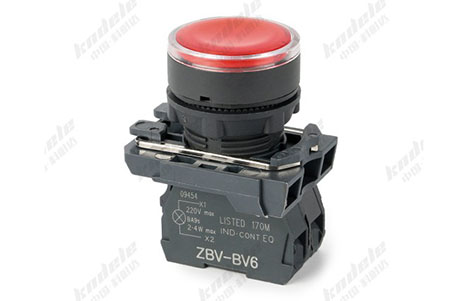
A push button with indicator lamp combines a standard push button with a visual signaling lamp. When pressed, the button sends a control signal, and the lamp provides instant feedback to indicate system status, such as ON, OFF, fault, or emergency stop.
These devices are commonly used in industrial control panels, automation systems, machinery, and safety circuits.
Push buttons can operate in different ways:
Momentary (Normally Open/Normally Closed): Returns to its original position after pressing; ideal for start/stop operations.
Latching: Remains pressed until pressed again; suitable for processes that require toggling states.
Choosing the right operation type ensures proper control behavior and safety in your system.
The type of lamp affects visibility, durability, and energy efficiency:
LED Lamp: Long-lasting, energy-efficient, low heat generation, ideal for continuous operation.
Incandescent Lamp: Brighter light but shorter lifespan and higher energy consumption.
Tip: LED lamps are preferred in modern industrial applications due to their durability and efficiency.
Ensure the push button matches the voltage and current requirements of your control circuit:
Low voltage DC circuits: Typically 12V, 24V, or 48V.
AC industrial circuits: Commonly 110V, 220V, or 380V.
Incorrect voltage or current rating can damage the button or cause operational failure.
The lamp color should match the status function:
Red: Emergency stop or fault
Green: Normal operation
Yellow/Amber: Warning or maintenance required
Blue/White: Special function or auxiliary signal
Using standard color codes improves operator clarity and safety.
Push buttons come in various mounting types:
Front panel mount: Standard for control panels, easy to install and maintain.
Flush mount: Sleek design, saves panel space, commonly used in compact panels.
Diameter and shape: Ensure compatibility with your panel cutout size.
Check IP ratings for dust and water resistance if used in harsh environments.
Consider mechanical durability, vibration resistance, and temperature range.
Industrial-grade push buttons withstand long-term, continuous operation with minimal maintenance.
If your system uses PLC or SCADA, ensure the push button:
Provides reliable signaling compatible with the control system.
Allows easy wiring for input/output connections.
Supports status monitoring through the indicator lamp.
Assess Your System Requirements: Determine voltage, current, and environmental conditions.
Consider Operator Interaction: Use colors and tactile feedback that improve usability.
Prioritize Durability: Choose industrial-grade push buttons for long-lasting operation.
Plan for Maintenance: Select buttons that are easy to replace or troubleshoot.
Check Compatibility: Ensure the button integrates seamlessly with PLC, SCADA, or other control systems.
Selecting the right push button with indicator lamp is essential for safety, reliability, and operational efficiency in any industrial or automation project. By carefully considering operation type, lamp type, voltage, color, mounting, durability, and system integration, you can ensure smooth operation, reduce downtime, and improve safety for operators.
Investing in the correct push button from the start saves time, reduces maintenance costs, and enhances overall system performance.
Q1: Can I use the same push button for AC and DC circuits?
Some buttons are rated for both, but always check the manufacturer specifications to avoid damage or malfunction.
Q2: How do I choose the right lamp color?
Follow standard industrial color codes: Red for faults, Green for normal operation, Yellow for warnings, Blue/White for auxiliary functions.
Q3: Are LED push buttons better than incandescent ones?
Yes, LEDs are more energy-efficient, durable, and last longer, making them ideal for industrial control panels.

