


Selecting the right sensor is crucial for the success of any automation or industrial project. Among various types of sensors, photoelectric switches are widely used for object detection, distance measurement, and process control due to their accuracy and reliability. However, choosing the appropriate photoelectric switch can be challenging given the variety of types, features, and environmental considerations. This guide will help you make an informed decision for your project.
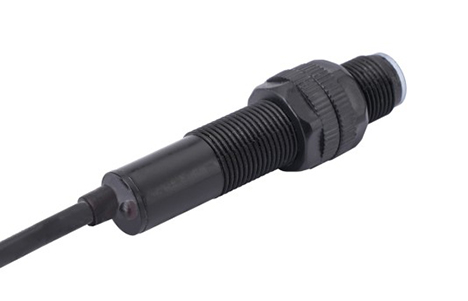 What Is a Photoelectric Switch?
A photoelectric switch (or photoelectric sensor) detects objects using a light beam—infrared, visible, or laser. Unlike mechanical switches, it operates without physical contact, reducing wear and tear while providing fast and precise detection. Photoelectric switches are commonly used in industrial automation, material handling, packaging, and safety systems.
Photoelectric switches operate in three main modes:
Through-Beam (Opposed Mode): The emitter and receiver are separate. The sensor detects objects when the beam is interrupted.
Best for: Long-range detection and high-accuracy applications.
Retroreflective Mode: The emitter and receiver are in the same unit, using a reflector opposite the sensor. The sensor triggers when the reflected light is blocked.
Best for: Medium-range detection with simpler installation.
Diffuse (Proximity) Mode: The sensor detects objects based on light reflected directly from the object.
Best for: Short-range detection without needing a separate reflector.
Consider the range you need:
Through-beam sensors: typically the longest detection distance, up to several meters.
Retroreflective sensors: moderate range, generally a few centimeters to a couple of meters.
Diffuse sensors: usually short-range, ideal for compact setups.
Choose a sensor that matches the distance between the sensor and the target object in your project.
The material, color, and transparency of the target object affect detection:
Opaque objects: Most sensors can detect them easily.
Transparent objects: Polarized retroreflective or specialized sensors are required.
Reflective surfaces: Diffuse sensors may need adjustment or high-sensitivity models.
Understanding the object characteristics ensures reliable detection.
Industrial environments vary, so consider:
Temperature: Ensure the sensor operates within the expected temperature range.
Dust and moisture: Choose sensors with an appropriate IP rating for protection.
Vibration or mechanical impact: Opt for robust sensors with shock resistance.
High-speed production lines require fast detection. Check the sensor’s response time to ensure it meets your operational speed requirements.
Photoelectric switches can provide different output signals:
PNP/NPN (Sinking/Source): Choose based on your control system compatibility.
Relay output: Useful for switching higher loads.
Analog output: Needed for distance measurement or proportional control applications.
Ensure the sensor’s voltage and current ratings match your system. Common options include 12-24V DC or 100-240V AC.
Consider sensor size, shape, and mounting options:
Space constraints in your system
Ease of alignment with objects or reflectors
Adjustability for fine-tuning detection
Modern photoelectric switches may include:
Adjustable sensitivity
Indicator LEDs for easy troubleshooting
Timer functions or delay outputs
Built-in logic for specific detection scenarios
These features can enhance flexibility and simplify maintenance.
Industrial Automation: Conveyor monitoring, robotic arms, and assembly verification.
Packaging Industry: Detecting missing items, checking fill levels, and ensuring proper alignment.
Safety Systems: Door automation, collision avoidance, and emergency stops.
Material Handling: Sorting, positioning, and object detection on production lines.
Q1: Can I use the same sensor for different object types?
A: It depends. Transparent or highly reflective objects may require specialized sensors, while standard opaque objects can be detected by most models.
Q2: How do I know which detection mode to use?
A: Base your choice on the installation distance, object type, and environmental conditions. Through-beam for long distance, retroreflective for medium distance, and diffuse for short-range applications.
Q3: What IP rating should I consider for industrial use?
A: Typically, IP65 or higher is recommended for dusty, wet, or harsh industrial environments.
Q4: Can I adjust the sensitivity of a photoelectric switch?
A: Many modern switches allow sensitivity adjustments to improve detection accuracy under varying conditions.
Choosing the right photoelectric switch is essential for ensuring reliable operation, high efficiency, and minimal downtime in your project. By considering factors such as detection mode, object type, environmental conditions, response time, and mounting requirements, you can select a sensor that meets your specific needs. Investing time in proper selection not only enhances productivity but also reduces maintenance costs and operational risks.

