


In modern electrical control systems, safety is more than a design requirement—it is a core operational priority. From industrial machinery and automation lines to power distribution panels, operators depend on fast and accurate visual feedback to avoid hazards. This is where pilot lamps—simple yet powerful indicator lights—play an essential role.
Pilot lamps provide real-time status information about circuits, equipment conditions, and abnormal situations. By offering intuitive and immediate visual cues, they help prevent accidents, reduce human error, and ensure safer operation.
This article explains how pilot lamps enhance safety in electrical control systems and why they remain indispensable in both traditional and digitalized industrial environments.
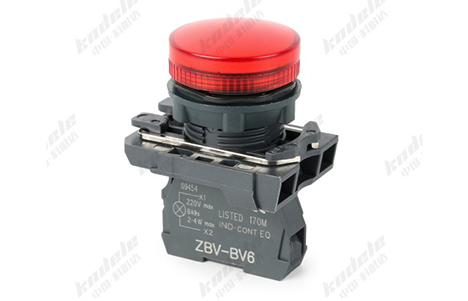 Instant Visual Status Indication
One of the biggest advantages of pilot lamps is their ability to display system status at a glance. When an operator opens a control panel, the illuminated indicators instantly show whether the system is:
Powered ON or OFF
Running or stopped
Overloaded or faulty
In a normal or alarm state
This quick visibility reduces the risk of misoperation. Instead of relying on meters or performing manual checks, workers immediately know the condition of the equipment. This is critical during emergencies when every second counts.
Pilot lamps play a key role in fault detection and early warning.
Different colors are widely used to represent specific conditions:
Red: Fault, emergency stop, overload
Yellow/Amber: Warning or abnormal state
Green: Normal operation
Blue/White: Special functions or auxiliary status
When a fault occurs—such as motor overload, circuit interruption, or overheating—the warning lamp lights up instantly. This helps operators respond before minor issues escalate into dangerous failures or costly downtime.
Maintenance safety is heavily dependent on clear isolation status. Pilot lamps help technicians verify:
Whether a circuit is truly de-energized
Whether a machine is in lockout/tagout (LOTO) mode
If an energy source has been safely disconnected
Without visual confirmation, a technician might mistakenly assume a circuit is safe to handle. An illuminated pilot lamp eliminates uncertainty, preventing accidental contact with live components.
Even in highly automated systems with digital HMIs, pilot lamps remain valuable because:
They provide redundant safety confirmation
They work even when the HMI or PLC fails
They ensure visibility from a distance without navigating screens
In industrial environments with dust, vibration, or noise, simple indicator lamps can outperform screens in reliability and visibility.
This redundancy helps avoid misinterpretation and strengthens overall system safety.
Standard color conventions improve safety by encouraging consistent operator behavior. When workers see a red lamp, they stop. When they see green, they proceed. This consistency:
Reduces miscommunication
Decreases training time
Ensures safer procedures across shifts
Pilot lamps create a shared safety language that everyone understands, improving operational discipline.
In dark or enclosed electrical rooms, pilot lamps provide necessary illumination for identifying equipment status. LED pilot lamps in particular offer:
High brightness
Low power consumption
Long service life
Clear, uniform colors
This visibility helps technicians avoid misoperation during night shifts or emergency maintenance.
Pilot lamps may look simple, but they play a powerful role in electrical system safety. By offering instant visual feedback, early warnings, clear isolation status, and reliable redundancy, they help operators make faster, safer decisions.
Whether in industrial automation, control panels, power distribution, or machinery operation, pilot lamps remain indispensable safety components.
As electrical systems continue to evolve, the importance of intuitive, fail-safe visual indicators will only grow—making pilot lamps a small but critical part of a safer, smarter industrial world.

