


Safety is a top priority in manufacturing facilities, where machinery and processes can pose significant risks to workers. Emergency push buttons (E-Stops) are critical safety devices designed to immediately stop equipment during hazardous situations, preventing injuries and minimizing damage.
 What Are Emergency Push Buttons?
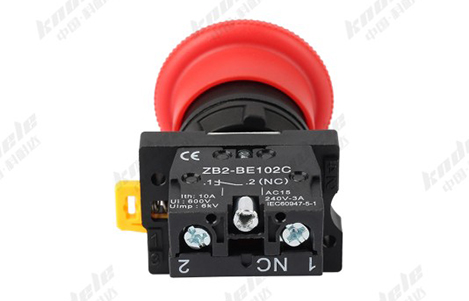
An emergency push button is a manually operated safety switch that stops machinery instantly during an emergency. These devices are typically red, mushroom-shaped buttons that are easy to locate and activate. Most E-Stops feature a latching mechanism, keeping the system shut down until manually reset.
Emergency push buttons are widely used in manufacturing, logistics, chemical plants, and energy industries. They are essential components of a facility’s safety system, helping to prevent accidents, reduce downtime, and comply with international safety standards like ISO 13850 and IEC 60947-5-1.
Background:
A large automotive manufacturing plant experienced frequent minor incidents on its assembly line, including jams in robotic arms and conveyor belts.
Solution:
The facility installed multiple mushroom-head emergency push buttons along the assembly line. Each E-Stop was wired to immediately cut power to the machinery in its zone.
Outcome:
Reduced response time to hazards by 80%.
Minimized damage to robotic arms and conveyor belts.
Increased worker confidence in safety procedures.
Key Lesson: Strategic placement of E-Stops along high-risk areas significantly improves safety and operational reliability.
Background:
A food processing plant faced challenges with high-speed cutting and packaging machines. Any mechanical fault or human error could lead to serious injuries.
Solution:
The plant installed key-reset emergency push buttons on all major machines. These buttons required a key to reset, ensuring only authorized personnel could restart the equipment.
Outcome:
Prevented accidental restarts after emergencies.
Ensured compliance with OSHA and local safety regulations.
Enhanced employee awareness and adherence to safety protocols.
Key Lesson: Key-reset E-Stops are ideal for facilities where controlled restart of equipment is critical.
Background:
An electronics manufacturer dealing with delicate automated assembly machines needed a rapid safety solution in case of equipment malfunction.
Solution:
The facility installed illuminated emergency push buttons with LED indicators at critical points along the production line. These buttons were integrated into a centralized monitoring system for real-time status tracking.
Outcome:
Operators could instantly locate and activate E-Stops even in dimly lit areas.
Safety incidents dropped by 60% within the first year.
The integration with monitoring systems provided detailed logs for audits and maintenance planning.
Key Lesson: Illuminated and smart E-Stops enhance visibility and monitoring, improving both safety and operational insight.
Optimal Placement – Install E-Stops near all high-risk machinery and along production lines.
Choose the Right Type – Mushroom-head, key-reset, or illuminated depending on operational needs.
Regular Testing – Test E-Stops periodically to ensure proper functionality.
Employee Training – Train staff on when and how to use emergency push buttons.
Integration with Safety Systems – Connect E-Stops to control systems for monitoring and maintenance tracking.
Enhanced Workplace Safety – Immediate machine shutdown prevents accidents.
Reduced Equipment Damage – Minimizes downtime and repair costs.
Regulatory Compliance – Meets ISO, IEC, and OSHA safety standards.
Improved Employee Confidence – Workers trust the safety systems in place.
Operational Insights – Smart E-Stops provide logs for maintenance planning.
Emergency push buttons are indispensable in manufacturing, where even minor incidents can lead to serious injuries or equipment damage. The case studies above show that strategic placement, type selection, and integration with safety systems are key factors in maximizing their effectiveness.
By learning from these real-world examples, manufacturers can implement E-Stops that protect employees, reduce downtime, and ensure compliance with safety regulations.
Q1: How many E-Stops should a manufacturing facility install?
A: At minimum, one for each high-risk area or piece of machinery. Large facilities may require multiple E-Stops along production lines.
Q2: Can emergency push buttons be integrated with automation systems?
A: Yes, modern E-Stops can be connected to PLCs and monitoring systems for real-time alerts and logging.
Q3: Should E-Stops be tested regularly?
A: Absolutely. Functional testing every 6 months and visual inspections every 3 months are recommended.
Q4: What type of E-Stop is best for automated assembly lines?
A: Illuminated or smart E-Stops are ideal for high-speed automated environments, providing visibility and integration with monitoring systems.

