


In modern industrial automation and smart systems, sensors play a critical role in detecting objects, controlling processes, and improving efficiency. Among these sensors, the photoelectric switch is one of the most widely used devices due to its precision, versatility, and reliability. This article will explore what a photoelectric switch is, how it works, and its key applications across various industries.
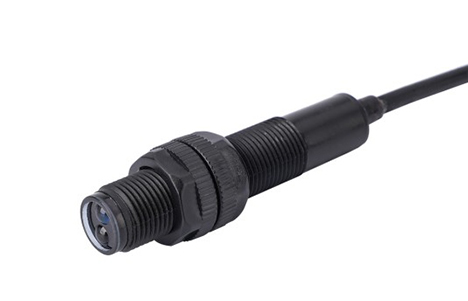 What Is a Photoelectric Switch?
A photoelectric switch, also known as a photoelectric sensor, is an electronic device that detects the presence, absence, or distance of an object using a light beam—typically infrared, visible, or laser light. Unlike mechanical switches that rely on physical contact, photoelectric switches operate without touching the object, which reduces wear and tear and increases the lifespan of the device.
In essence, a photoelectric switch converts light energy into an electrical signal. When an object interrupts or reflects the light beam, the sensor triggers a response, such as turning on a machine, stopping a conveyor belt, or sending a signal to a control system.
Photoelectric switches work based on the interaction between a light source and a receiver. There are three common working modes:
Through-Beam Mode
In this mode, the sensor consists of a separate emitter and receiver placed opposite each other.
The emitter sends a continuous light beam to the receiver.
When an object blocks the beam, the receiver detects the interruption, and the switch is activated.
Advantages: Long detection range, high accuracy.
Common Use: Conveyor systems, object counting.
Retroreflective Mode
The emitter and receiver are in the same housing, and a reflector is installed opposite the sensor.
Light emitted by the sensor reflects off the reflector back to the receiver.
When an object interrupts the reflected beam, the sensor triggers an output signal.
Advantages: Simple installation, moderate detection distance.
Common Use: Door sensors, packaging lines.
Diffuse (or Proximity) Mode
The sensor emits light, which reflects directly off the object and returns to the receiver.
The sensor detects the object based on the reflected light intensity.
Advantages: No need for a separate reflector, flexible installation.
Common Use: Object detection on production lines, material handling.
Non-contact operation: Minimizes mechanical wear and increases device lifespan.
High precision: Accurate detection of objects, even small or fast-moving ones.
Versatility: Can detect transparent, opaque, or reflective objects depending on the type.
Fast response time: Ideal for high-speed automation processes.
Easy installation and maintenance: Compact design and minimal moving parts.
Photoelectric switches are widely used across different industries:
Industrial Automation
Detecting objects on assembly lines, counting parts, and controlling robotic arms.
Packaging Industry
Ensuring proper alignment, filling levels, and detecting missing items.
Safety Systems
Door and gate automation, anti-collision systems in machinery.
Material Handling
Conveyor belt monitoring, sorting systems, and object positioning.
Smart Buildings
Lighting control based on occupancy detection and energy-saving systems.
Automotive Industry
Detecting vehicle presence in parking systems or automated assembly lines.
Q1: Can photoelectric switches detect transparent objects?
A: Yes, some specialized sensors, like through-beam or polarized retroreflective types, are designed to detect transparent materials such as glass or plastic.
Q2: What is the difference between a photoelectric switch and an infrared sensor?
A: While both use light, photoelectric switches are generally used for object detection and automation, whereas infrared sensors often focus on motion or temperature detection.
Q3: How far can a photoelectric switch detect?
A: Detection range varies by type: through-beam sensors can reach several meters, while diffuse sensors are usually effective at shorter distances.
Q4: How do I choose the right photoelectric switch for my project?
A: Consider factors like detection distance, object type, environmental conditions, and mounting constraints.
A photoelectric switch is a reliable, efficient, and versatile sensor widely used in automation, safety, and industrial applications. By understanding its working principles, types, and applications, engineers and system designers can optimize processes, enhance safety, and improve productivity. Whether for detecting objects on a production line or automating doors and lighting, photoelectric switches remain a cornerstone of modern sensor technology.

