


An emergency stop switch, commonly known as an E-stop button, is a vital safety device used in industrial machines, automation equipment, and control systems. It allows immediate power cutoff during critical failures or hazards, helping prevent serious injury or equipment damage.
Whether you’re upgrading machinery or doing a fresh emergency stop switch installation, a proper wiring connection, safe configuration, and function testing are essential.
In this guide, you’ll learn everything from how to wire an emergency stop switch, understand the working principle of NC contacts, and troubleshoot common issues, with step-by-step instructions and expert tips.
An emergency stop switch (E-stop button) is a type of safety switch that instantly cuts power to connected equipment during emergencies. Unlike standard on/off switches, an E-stop must be manually reset after activation.
Key features of an emergency stop switch:
Operates via normally closed (NC) contacts, ensuring a fail-safe design
Breaks the circuit immediately for fast shutdown
Must be manually released (pull or twist to reset)
Compliant with ISO 13850, IEC 60947, and other international safety standards
You’ll typically find these switches in factory conveyor systems, robotic arms, CNC machines, and other automated industrial setups.
The primary goal of an emergency stop switch is to eliminate power to a system when active so that it does not operate. You can initiate this action by pressing the switch, effectively opening and closing electrical contacts to cut off power to the supplied circuit, ensuring safety.
Most E-stops use a normally closed (NC) contact configuration. This means:
Some E-stops also have dual-channel wiring for redundancy, ensuring safety even if one contact fails.

Choosing the correct emergency stop button is the first step toward safe wiring. Consider these criteria:
Voltage & Current Rating – Must match your machine’s control voltage.
Contact Type – Always use NC (normally closed) for safety applications
Mounting Options – Panel-mounted, cable-pull, or foot-operated types depending on your use case
Below is a simple method for emergency stop switch connection using a single NC contact:
Tip: Always refer to the E-stop switch wiring diagram provided by your manufacturer to ensure accurate connections.
Tips: One important thing needs mentioning here, you can avail emergency stop buttons from KNDELE emergency stop push button. They are easy to identify, show high performance, and have anti-mistouch design.
Even though emergency stop switches are built for durability, problems can arise. Here’s how to diagnose and fix common E-stop button failures:
| Issue | Possible Cause | Solution |
| E-stop doesn’t stop the machine | Faulty wiring, stuck contacts | Check connections, test with a multimeter |
| Switch won’t reset | Mechanical jam, damaged latch | Inspect for debris, replace if necessary |
| False triggering | Loose wiring, vibration | Secure all terminals, use anti-vibration mounts |
| Burned contacts | Over-current, arcing | Replace the switch with a higher-rated model |
Ensuring a secure and correct emergency stop switch connection is not just a technical task — it’s a safety responsibility. Always:
Use NC contacts to ensure fail-safe performance.
Follow your machine’s wiring diagram for accurate installation.
Test the switch before putting the system back into operation
It is only accurate to deduce that a well-working E-stop is a reflection of an organization that values safety and security. It has created an atmosphere where workers feel safe operating machinery.
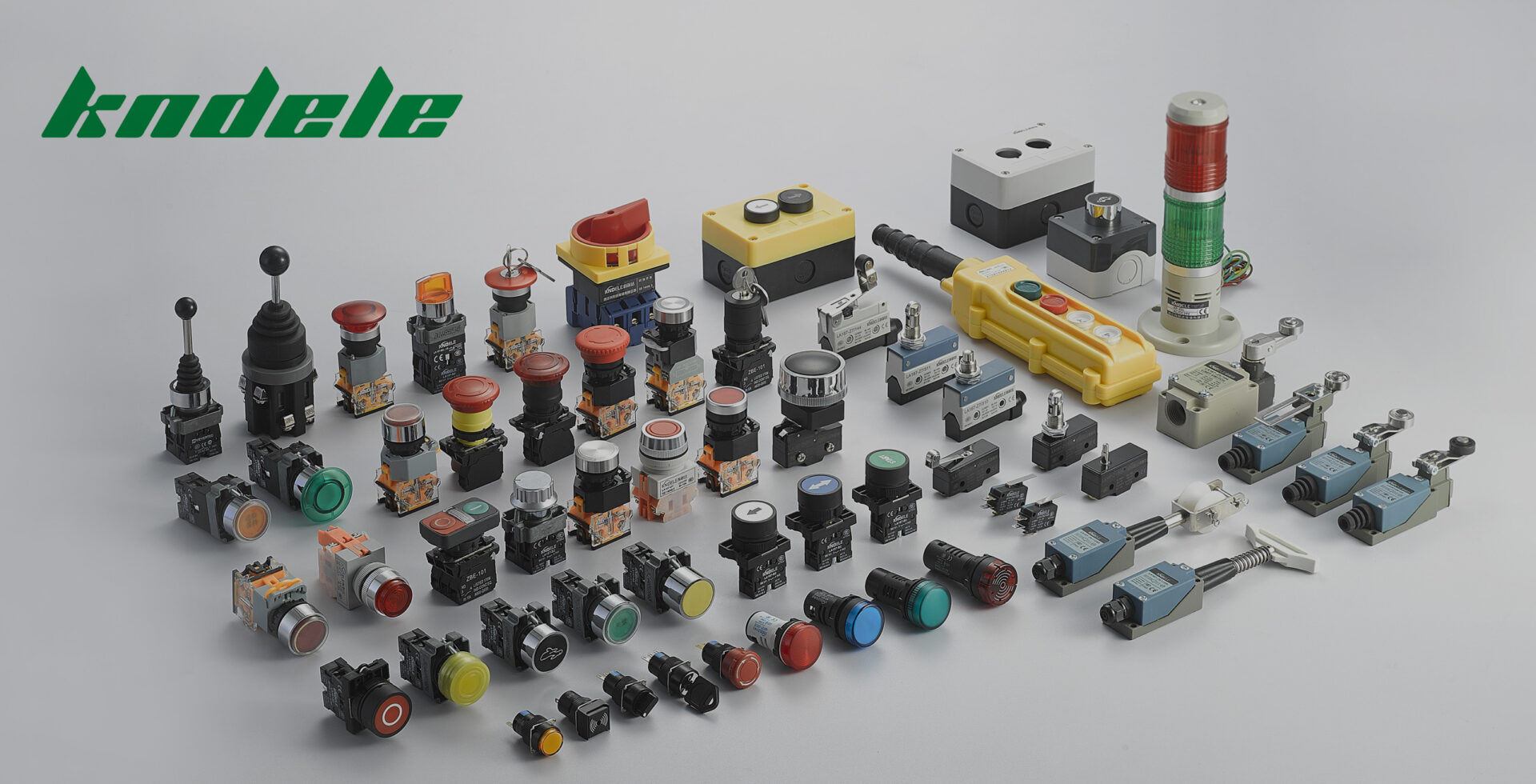
If you are looking for quality emergency stop buttons, then go for KNDELE. They, as a brand, provide a wide range of push button switches and their derivatives, which are suitable for different markets. Their push button switches offer:
Anti-mistouch design
Compliance with CE and RoHS standards
Long mechanical life and easy installation

